The Wheel of the Year is a cycle of eight seasonal festivals followed by many modern pagans and hedge witches: Samhain, Yule, Imbolc, Ostara, Beltane, Litha, Lughnasadh and Mabon. They fall roughly every six weeks, marking the solstices, equinoxes and the points between them, and offer a simple way to notice and celebrate the turning seasons at home.
What is the Wheel of the Year?
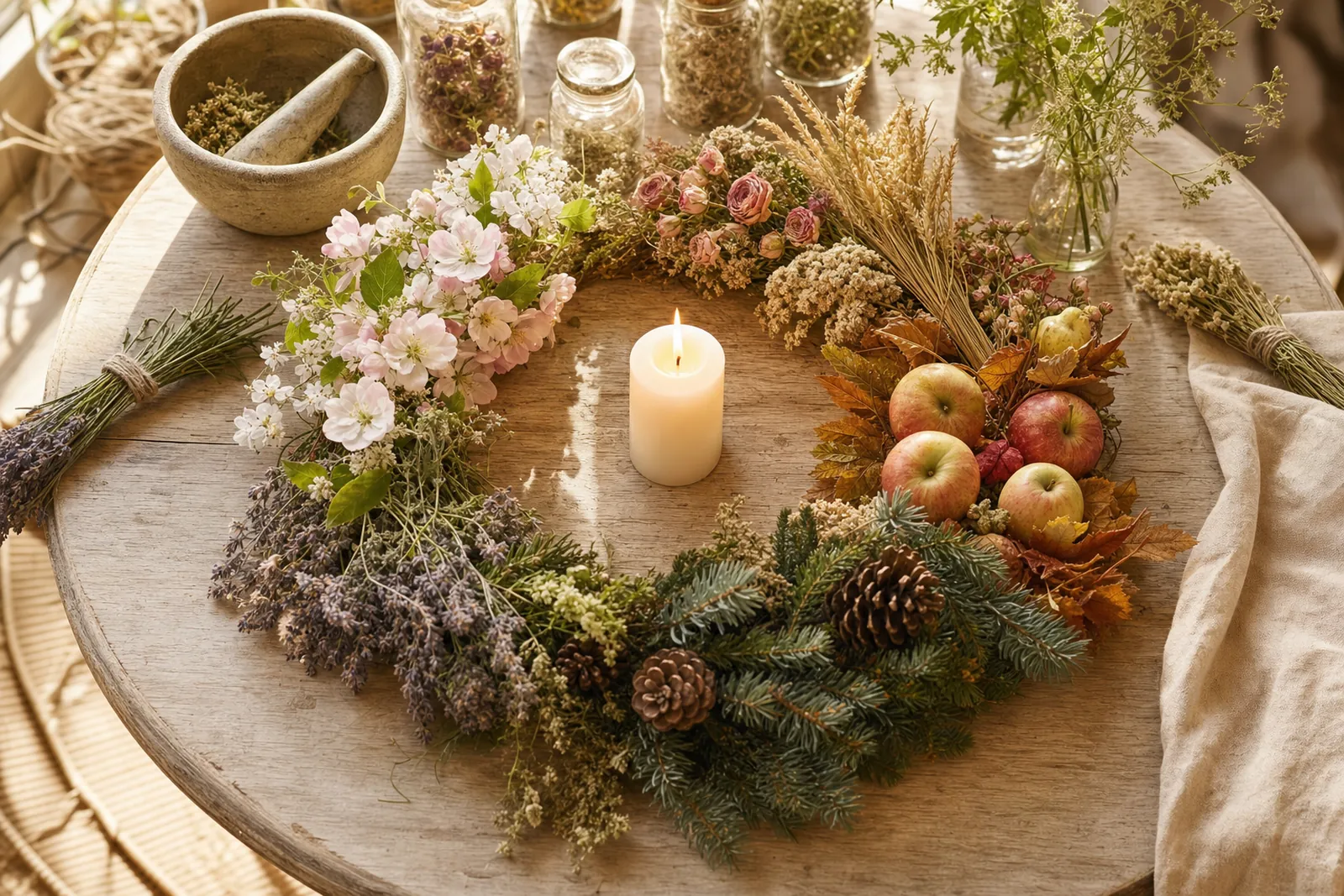
The Wheel of the Year is a way of seeing the year as a circle rather than a straight line. Four of its festivals are the solstices and equinoxes, the astronomical turning points of the sun. The other four fall roughly between them and are often called the cross-quarter days.
It helps to know a little about where it comes from. The festivals themselves draw on older traditions: Samhain, Imbolc, Beltane and Lughnasadh were seasonal festivals in Gaelic Ireland and Scotland, midwinter celebrations are found across Northern Europe, and Lammas was a harvest observance in England. However, the eight-festival wheel as a single calendar is a modern arrangement. It was brought together by modern pagan groups in Britain in the mid-20th century, and some of the names, such as Ostara, Litha and Mabon, were attached to the equinoxes and midsummer later still. Knowing this does not make the wheel any less meaningful; it simply means you are part of a living, modern practice that draws gently on old seasonal customs.
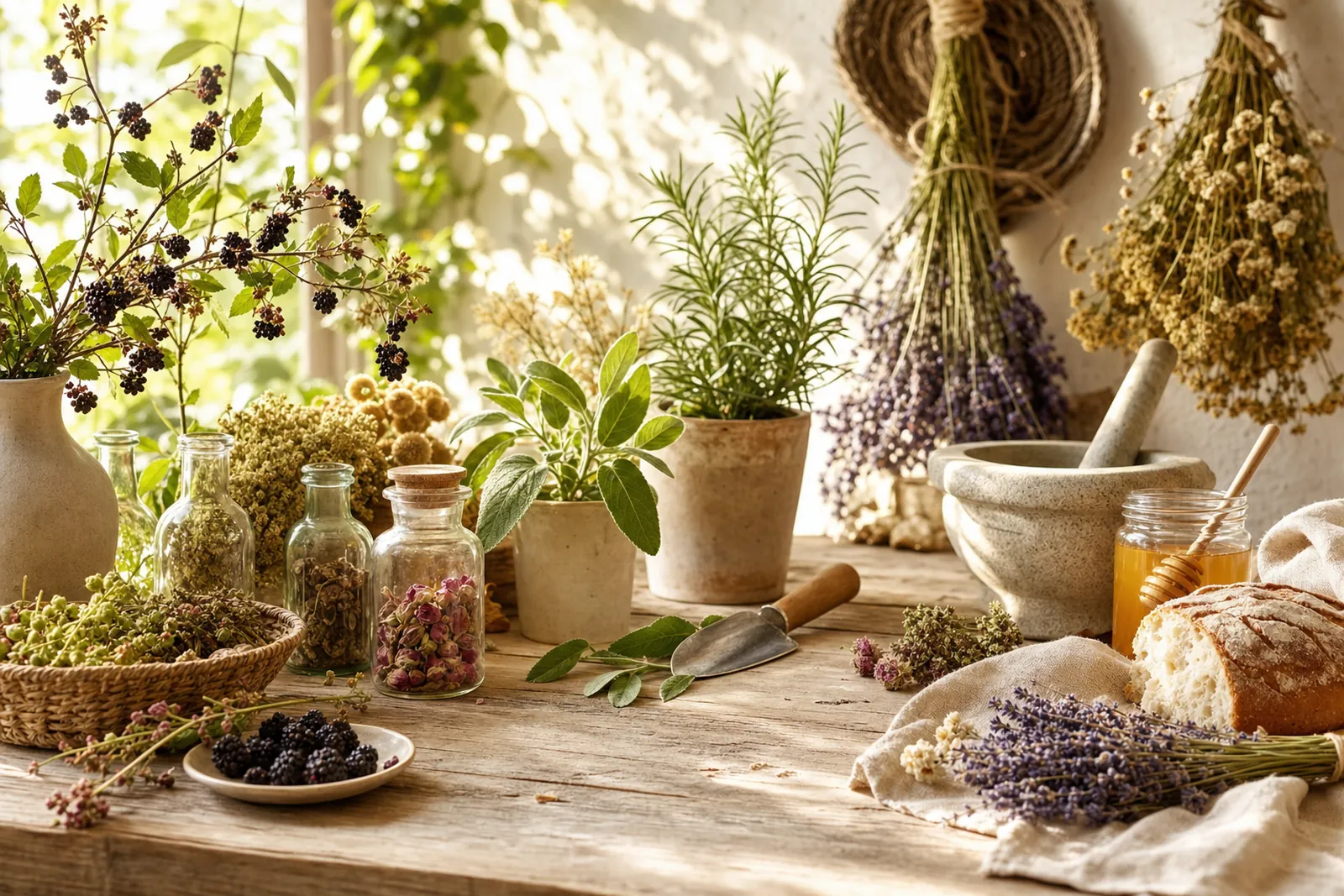
For a hedge witch, the wheel is less about strict dates and more about paying attention. It is a reason to step outside, notice what is in flower or berry, and bring a little of the season indoors. If you are new to hedge magic itself, start with our guide What Is Hedge Magic?, and you can explore the festivals in more depth on our Wheel of the Year page.
The eight festivals at a glance
Dates below are approximate for the northern hemisphere. Solstices and equinoxes move by a day or two each year, and many people celebrate on the nearest convenient evening.
| Festival | Approximate date | Season and themes |
|---|---|---|
| Samhain | 31 October to 1 November | End of harvest, remembrance, the dark half of the year |
| Yule | Around 21 December (winter solstice) | Longest night, return of the light, rest |
| Imbolc | 1 to 2 February | First stirrings of spring, hearth, fresh starts |
| Ostara | Around 20 March (spring equinox) | Balance of day and night, growth, new life |
| Beltane | 30 April to 1 May | Blossom, fire, warmth, the light half of the year |
| Litha | Around 21 June (summer solstice) | Longest day, abundance, the sun at its height |
| Lughnasadh or Lammas | 1 August | First harvest, grain and bread, gratitude |
| Mabon | Around 22 September (autumn equinox) | Second harvest, balance, gathering in |
The festivals, one by one
Samhain (31 October to 1 November)
Samhain marks the end of the harvest and the start of the dark half of the year. In Irish and Scottish folklore it was a time when the boundary between this world and the otherworld was thought to be thin, and it is still widely seen as a time for remembering those who have gone before. Our article on Samhain traditions explores its folklore in more detail.
A simple way to mark it: light a candle in the window at dusk, set out a photograph or keepsake of someone you miss and write a few lines about them in your notebook. A cast iron cauldron filled with a little sand makes a safe, atmospheric dish for a tealight on the altar.
Yule (around 21 December)
The winter solstice is the longest night of the year, and from here the days slowly begin to lengthen. Many familiar Christmas customs, from evergreens indoors to the Yule log, are often linked in popular tradition with older midwinter celebrations.
A simple way to mark it: spend the evening by candlelight, then light a fresh candle at sunrise the next morning to welcome the returning sun. Bring in a few evergreen sprigs for decoration, keeping holly and ivy berries well out of reach of children and pets.
Imbolc (1 to 2 February)
Imbolc sits at the very first edge of spring, when snowdrops appear and lambing traditionally begins. It is associated with Brigid, honoured in Irish tradition as both a goddess and a saint, and with hearth, fire and new beginnings.
A simple way to mark it: give your home a gentle spring clean, open the windows for an hour and light a white candle for fresh starts. Many people also set intentions for the year ahead in their Book of Shadows.
Ostara (around 20 March)
At the spring equinox, day and night are roughly equal and the year tips towards the light. The name Ostara is a modern one, often linked to Ēostre, a spring goddess mentioned by the Anglo-Saxon writer Bede. Eggs, hares and seeds are popular modern symbols.
A simple way to mark it: plant a few seeds in a pot on your windowsill, decorate an egg, or take a walk to look for the first blossom. A small dish of seeds in an offering bowl makes a pretty springtime altar.
Beltane (30 April to 1 May)
Beltane welcomes the light half of the year. In Gaelic tradition it was a fire festival, and May Day customs across Britain include maypoles, garlands and gathering early-morning dew. Hawthorn, or may blossom, is closely tied to it in folklore, though bringing it indoors was often considered unlucky.
A simple way to mark it: get up early, walk somewhere green, and make a small garland or posy from garden flowers. In the evening, light a candle for warmth, joy and growth.
Litha (around 21 June)
Midsummer is the longest day, when the sun is at its strongest. Midsummer Eve has its own folklore across Britain and Europe, including bonfires and the gathering of St John's wort, a flower traditionally associated with the sun.
A simple way to mark it: watch the sunrise or sunset, spend time outdoors, and decorate your altar with yellow and gold. A sunny scented candle or a bunch of garden flowers brings the season inside.
Lughnasadh or Lammas (1 August)
This is the first harvest, named in Gaelic tradition after the god Lugh. The English name Lammas is usually explained as coming from "loaf mass", when bread from the new grain was blessed.
A simple way to mark it: bake or buy a good loaf, share it with friends, and say a few words of thanks for what the year has brought so far. Leave a small piece on your altar as a token of gratitude.
Mabon (around 22 September)
At the autumn equinox, day and night are balanced again before the nights draw in. It is a time of gathering in, putting things in order and giving thanks. The name Mabon, taken from a figure in Welsh legend, was attached to this festival in modern times.
A simple way to mark it: arrange apples, conkers, acorns or fallen leaves on your altar, take stock of the year in your notebook and light an earthy candle or incense in the evening. Always burn incense in a proper holder on a heatproof surface and never leave it unattended.
How to follow the wheel as a beginner
You do not need to celebrate all eight festivals in your first year. Many people start with the one that is coming up next and add others as they go. A few gentle tips:
- Keep a seasonal altar. Change one thing at each festival, such as the cloth, a candle colour or a natural find. Our altar cloths make it easy to change the mood.
- Write it down. Note what you saw and did at each festival in your Book of Shadows. Next year you will love reading it back.
- Walk the same path. Watching one hedge or tree through all eight festivals teaches you more than any book. Our guide to hedgerow plants and folklore will help you put names to what you see.
- Look but do not taste. Many hedgerow plants and berries are toxic and should never be eaten unless identified by an expert, so enjoy them with your eyes and camera.
- Follow the moon too. The moon calendar adds a smaller monthly rhythm inside the larger turning of the year.
If you are just beginning, our guide to starting a hedge magic practice at home shows how the festivals fit alongside a weekly candle, a seasonal walk and moon notes.
Bring it home
Whichever festival is next on the wheel, that is a lovely place to begin. Choose one candle, one seasonal find and one evening, and let the wheel turn from there. When you are ready to build a seasonal altar, browse our altar and ritual tools and ritual candles.
Questions and answers
What are the eight festivals of the Wheel of the Year?
They are Samhain (31 October to 1 November), Yule (winter solstice, around 21 December), Imbolc (1 to 2 February), Ostara (spring equinox, around 20 March), Beltane (30 April to 1 May), Litha (summer solstice, around 21 June), Lughnasadh or Lammas (1 August) and Mabon (autumn equinox, around 22 September). Dates are approximate for the northern hemisphere.
Is the Wheel of the Year an ancient tradition?
Partly. Several of the festivals draw on older seasonal customs, including Gaelic festivals such as Samhain and Beltane, midwinter celebrations and harvest observances. The eight-festival wheel as a single calendar, though, is a modern arrangement brought together by pagan groups in Britain in the mid-20th century, and some of the festival names are more recent still.
When does the pagan year begin?
Many modern pagans and hedge witches regard Samhain, at the end of October, as the start of the new year, because it marks the beginning of the dark half of the year. Others prefer to begin at Yule or Imbolc. As the wheel is a circle, you can start following it at whichever festival comes next.
Do I have to celebrate every festival on the exact date?
Not at all. The solstices and equinoxes shift by a day or two each year, and many people mark festivals on the nearest weekend or a quiet evening that suits them. What matters most is taking a moment to notice the season, rather than keeping to a precise date or a set ritual.
How can I celebrate the Wheel of the Year at home?
Keep a small seasonal altar and change one thing at each festival, such as a candle, a cloth or a natural find from a walk. Light a candle, write a few lines in a notebook about the season and share food with people you love. Simple, repeated gestures make the wheel feel personal over time.