
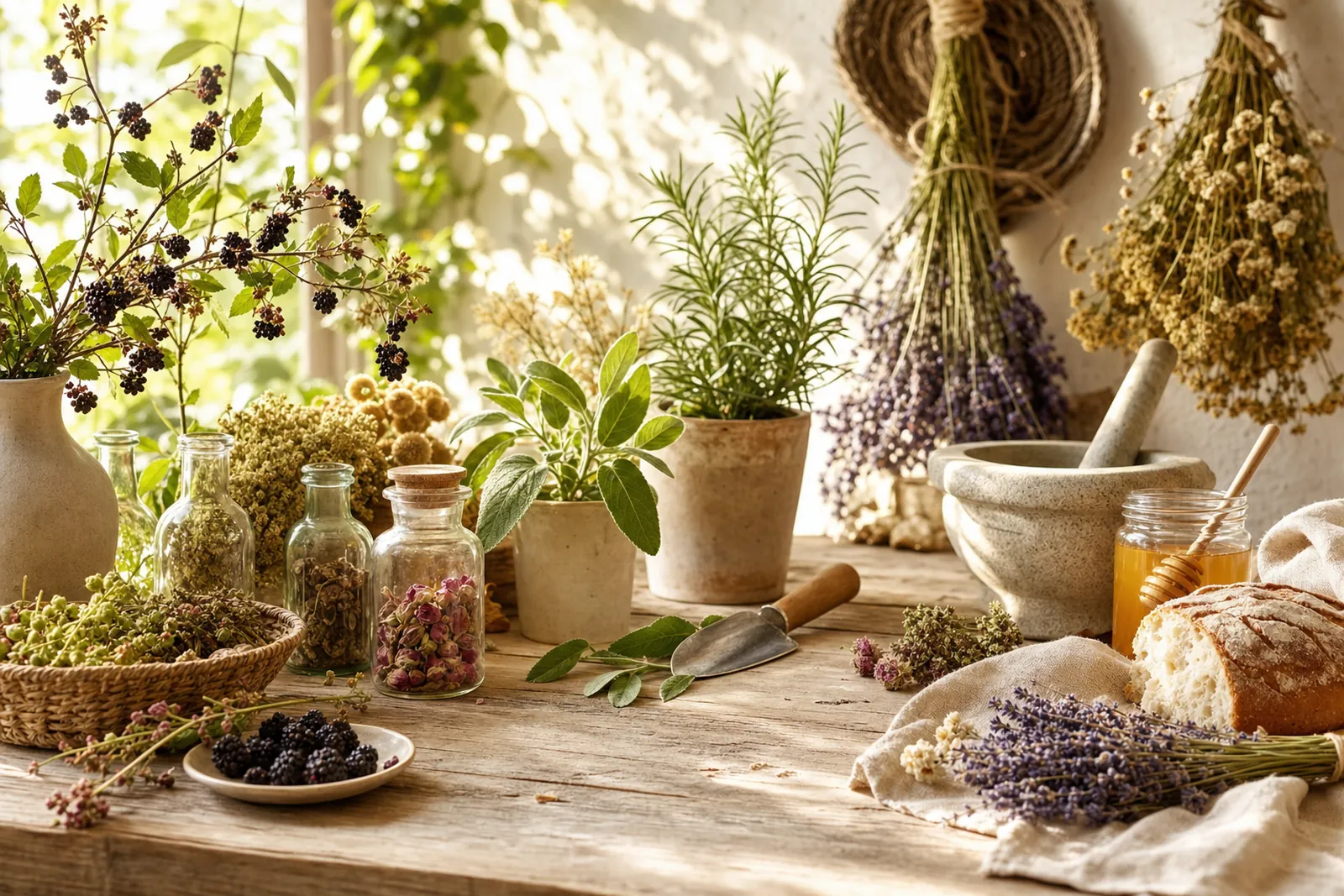
A hedge witch works at the boundaries, following the seasons, the wild plants of the hedgerow and quiet otherworldly practices such as dreamwork and divination. A green witch centres their practice on gardens, growing things and the natural world. A kitchen witch brings magic into the home through cooking, tea and the hearth. Most people happily blend all three.
These labels are modern, loose and overlapping, and they are used by people of every gender. Think of them less as boxes and more as different rooms in the same house. Here is how each one tends to look in everyday practice, so you can see which parts feel most like home.
What is a hedge witch?
The hedge witch takes the name from the hedgerow, the old boundary between village and wild, and, by extension, between this world and the otherworld. The term in its modern sense was popularised in the late twentieth century, notably by Rae Beth's 1990 book Hedge Witch. Our beginner's guide to hedge magic explains the background in more depth.
In practice, a hedge witch tends to:
- work alone and quietly, often outdoors or at a simple home altar;
- follow the seasons closely and mark the festivals of the Wheel of the Year;
- learn the folklore of wild plants and trees, such as elder, rowan and hawthorn;
- explore the otherworldly side of practice through dreams, meditation and divination with tarot, runes or a pendulum.
If you feel drawn to edges, twilight, old lanes and the stories behind them, this may be your path.
What is a green witch?
A green witch's practice grows from the natural world, and very often from a garden. Where the hedge witch watches the wild edges, the green witch usually has their hands in the soil: growing herbs and flowers, learning the names of plants, caring for houseplants, noticing the bees and birds that visit. Care for the land is often central, and many green witches see gardening itself as a form of ritual.
A green witch might:
- grow herbs in pots or a patch of garden, choosing plants for their folklore and symbolism;
- dry flowers and seed heads from the garden for the altar or for seasonal décor;
- bring living plants indoors in planters and garden pieces;
- keep natural treasures found outdoors, such as stones, feathers and shells, alongside crystals.
If you are happiest in a garden, on an allotment or surrounded by houseplants on a city windowsill, this may feel familiar.
What is a kitchen witch?
The kitchen witch, sometimes called a hearth witch, finds magic in the everyday. The heart of the practice is the home: cooking, baking, brewing tea and keeping a warm, welcoming house. Stirring a pot with an intention in mind, baking bread for a festival or brewing tea before a difficult conversation are all small acts of kitchen witchcraft.
A kitchen witch might:
- cook seasonal food for each festival, using familiar culinary herbs from the garden or the shop;
- keep a pestle and mortar on the worktop for grinding spices and dried herbs;
- make a small ritual of brewing loose leaf tea, choosing a blend to suit the moment;
- keep a candle burning safely on the kitchen table while the household gathers.
Kitchen witchcraft is about everyday care and folklore. Stick to familiar culinary ingredients, and never cook with or eat wild plants unless they have been identified by an expert, as many hedgerow plants and berries are toxic.
Hedge witch vs green witch vs kitchen witch at a glance
| Hedge witch | Green witch | Kitchen witch | |
|---|---|---|---|
| Main focus | Boundaries, seasons, the wild and the otherworld | Plants, gardens and the natural world | Home, hearth, food and family |
| Where you'll find them | On a country lane at dusk, or at a quiet windowsill altar | In the garden, on the allotment or among houseplants | At the stove, the kitchen table or the teapot |
| Typical tools | Book of Shadows, cauldron, candles, divination tools | Trowel, plant pots, dried flowers, crystals | Pestle and mortar, wooden spoon, teapot, candles |
| A simple ritual | A seasonal walk, noting what has changed | Sowing seeds with an intention at the new moon | Stirring a seasonal dish with a wish for the household |
| Might suit you if | You love folklore, solitude and the turning year | You feel calmest with your hands in the soil | You show care through food, warmth and welcome |
Where the three paths overlap
Look closely and the three paths share a great deal. All of them are rooted in the everyday rather than the grand. All of them pay close attention to the seasons and to plants. All of them tend to be practised alone or with family, often without formal ceremony. And all three draw, in their modern forms, on the same well of British and European folk custom, where a household's charms, cooking, gardening and seasonal celebrations were never really separate things.
A hedge witch who walks the lanes in autumn will come home and light a candle in the kitchen. A green witch who grows rosemary will cook with it. A kitchen witch will notice when the elder flowers along the hedge. The labels describe where your attention naturally rests, not where it has to stay.
You don't have to choose one
It is easy to feel that you must pick the right label before you begin. You don't. Many practitioners describe themselves with two or three of these words, and many use none at all. Your practice will probably change with your life, too: more garden in a home with a garden, more hearth in a busy winter, more hedge on long summer evenings.
A good way to find your feet is simply to try a small practice from each path for a month or so and notice which ones you keep coming back to. Keep a note of what you try in a Book of Shadows or notebook, and after a season you will see a pattern emerging.
Simple ways to try each path
- Hedge: walk the same stretch of hedgerow once a week and learn the folklore of one plant you see. Our guide to hedgerow plants and their folklore is a lovely companion.
- Green: sow a pot of a culinary herb such as basil or thyme on a windowsill, and note its growth alongside the moon phases.
- Kitchen: make a weekly ritual of a pot of tea brewed in a favourite teapot, with a candle lit while it steeps.
- All three: set up a small windowsill altar, as described in our guide to starting a hedge magic practice at home.
Whenever you light a candle or burn incense, keep it on a heatproof surface and never leave it unattended.
Bring it home
Whichever path calls to you, begin with one or two things you will genuinely use. A notebook, a candle and a pestle and mortar would serve a hedge, green or kitchen witch equally well. Our candles and altar and ritual tools are good places to browse when you are ready.
Questions and answers
Can you be a hedge witch and a kitchen witch?
Yes, and many people are. The labels describe where your attention naturally rests rather than strict rules. You might walk the hedgerows and follow the seasons as a hedge witch, then come home and cook a seasonal meal with intention as a kitchen witch. Most practitioners blend several paths, and their mix often changes over the years.
What is the difference between a green witch and a hedge witch?
A green witch focuses mainly on plants, gardens and growing things, often with their hands in the soil. A hedge witch is drawn to the wild edges and boundaries: the seasons, hedgerow folklore and quieter otherworldly practices such as dreamwork and divination. Both love plants, but the green witch tends to cultivate them, while the hedge witch tends to observe them.
What does a kitchen witch do?
A kitchen witch finds magic in everyday home life. That might mean cooking seasonal food for festivals, stirring a pot with an intention in mind, brewing tea as a small daily ritual, keeping a candle on the kitchen table, or simply making the home warm and welcoming. It is a gentle, practical path that fits easily around busy lives.
How do I know which type of witch I am?
Try a small practice from each path for a month or two and notice which ones you return to without being reminded. Keep notes in a notebook or Book of Shadows. Over a season, a pattern usually emerges. You might find you are mostly one, a blend of two, or that no label fits, which is perfectly fine.
Do I need a garden to be a green witch?
No. A sunny windowsill with a few pots of herbs, some houseplants or a window box is plenty, and many green witches live in flats and towns. What matters is a relationship with growing things and the natural world, which can include visits to parks, allotments and public gardens as well as caring for plants at home.


