
To read tarot, shuffle the deck while thinking of a question, draw a few cards, and let the pictures and their traditional meanings guide your reflection. Beginners do best with a single card or a simple three-card spread, a notebook, and no pressure to memorise anything on the first day.
Choosing your first tarot deck
The best first deck is the one whose pictures you enjoy looking at. Many beginners choose a deck based on the classic Rider-Waite-Smith imagery, because its scenes are easy to read and most books and guides refer to it. Others prefer decks with softer art, animals or folk imagery. Browse our tarot decks and accessories and look for clear illustrations, comfortable card size and a guidebook included in the box.
It is also worth choosing a cloth or pouch to keep the cards in. A square of silk or velvet turns a pack of cards into something more ceremonial.
How is a tarot deck organised?
A standard deck has 78 cards, split into two parts:
- The Major Arcana (22 cards): from The Fool to The World. These cards show big themes and turning points, such as The Lovers, Death, The Star and The Moon.
- The Minor Arcana (56 cards): four suits of Wands, Cups, Swords and Pentacles, each running from Ace to Ten with four court cards. They describe everyday matters.
In general, Wands are linked with energy and action, Cups with feelings, Swords with thoughts and Pentacles with work, money and the home. Learn those four ideas and you already have a useful key to the Minor Arcana.
How to read tarot cards step by step
- Set the scene. Choose a quiet place and perhaps light a ritual candle or a stick of incense to mark the moment.
- Ask an open question. Questions beginning with how or what work better than yes or no. Try: what do I need to know about this week?
- Shuffle. Shuffle in whichever way is comfortable, until it feels right to stop.
- Draw your cards. Lay them face down, then turn them over one at a time.
- Look before you look up. Notice colours, figures, expressions and direction before checking the guidebook. What does the picture say to you?
- Read, then write. Note down the cards and your impressions in a journal. Our journals and stationery include some pretty options for a tarot diary.
A simple three-card spread
The three-card spread is the most popular for beginners because it is easy to follow and flexible. Lay out three cards in a row:
- Card one: the past, or what has led you here.
- Card two: the present, or what is happening now.
- Card three: what is ahead, or what to bear in mind.
You can also use the same layout for situation, challenge and advice. Read the cards together as a short story rather than in isolation. If The Star sits beside the Eight of Swords, for example, you might see hope appearing after a stuck, anxious stretch.
Tarot tips for beginners
A few habits will help you feel confident sooner:
- Pull one card each morning and note how it fits the day.
- Consider reversed cards optional until you are comfortable. Many readers never use them.
- Do not worry about getting meanings wrong. Intuition is as important as the book.
- Use tarot for reflection, not for predicting medical, legal or financial matters.
- Keep your deck wrapped and stored somewhere safe, and keep your first notes together.
Cards have been used for reflection and storytelling in Europe since the fifteenth century, when they began as a game, and the occult associations came much later. Remember that tarot is a tool for thinking, and you stay in charge of the choices you make.
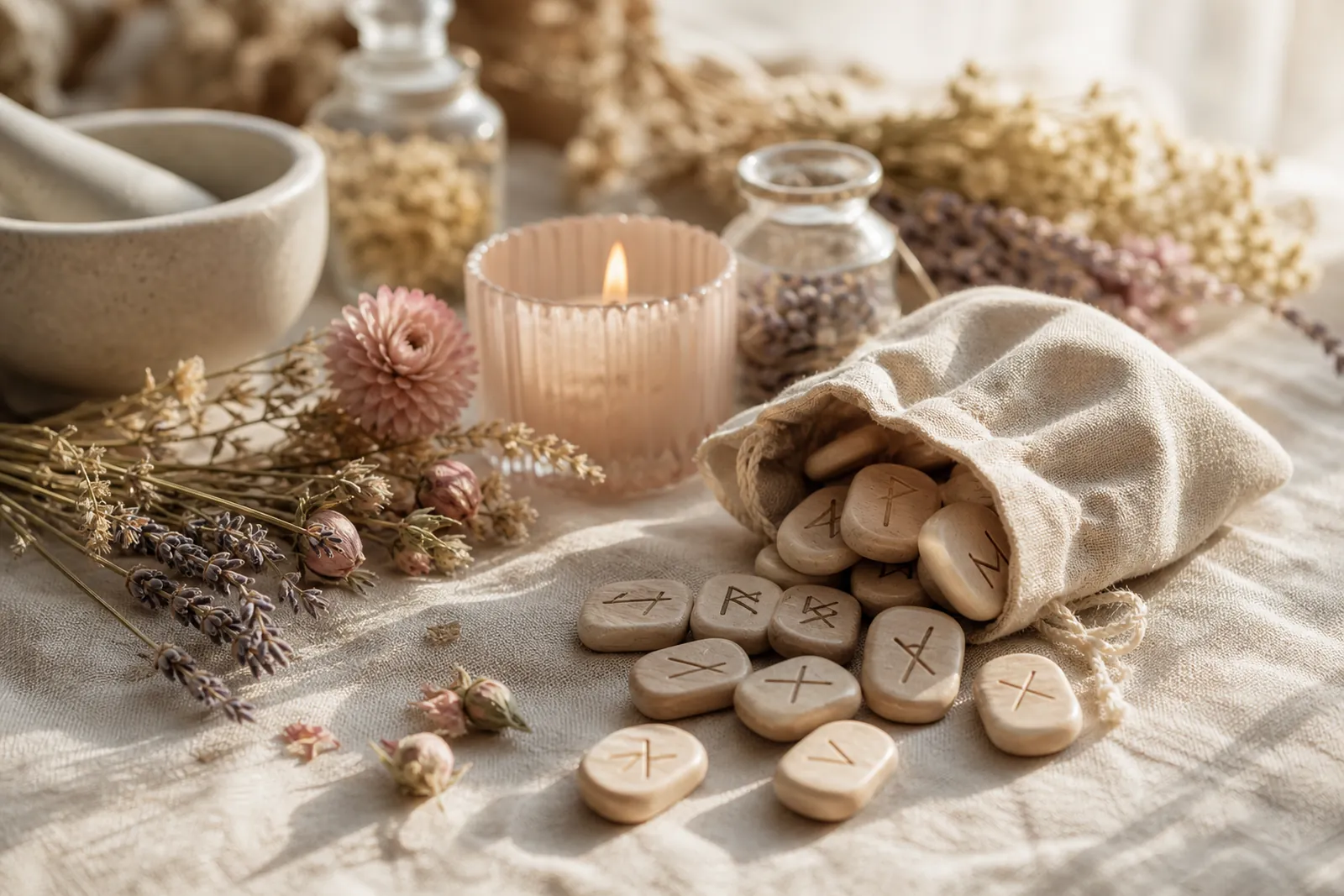
If you enjoy tarot, there are other tools to explore alongside it. Many readers enjoy pairing cards with other forms of divination. You might like to try runes, a swinging pendulum for quick answers, or the polished surfaces of crystal balls and scrying. Each offers a different way of listening to your intuition.
Take your time with the deck. Some readers spend a whole season with just the Major Arcana before adding the suits, and there is no wrong pace. Every reading adds a little more to your own personal vocabulary of the cards, and over weeks you will notice favourites and recurring faces emerging.
Bring it home
Starting is the hardest part, and after that it becomes a quiet daily habit. When you are ready, explore our tarot, runes and divination collection and choose the deck you cannot stop looking at.
Questions and answers
Do I need to be psychic to read tarot?
No. Tarot is a symbolic language that anyone can learn. You study the pictures, learn the traditional meanings and gradually trust your own impressions. Many readers see it as a way of reflecting on a question rather than a psychic gift.
How many cards should a beginner draw?
Start with one card a day, then move on to a three-card spread. Fewer cards make it easier to focus on each image and meaning. Larger spreads, such as the Celtic Cross, are best left until you know the cards well.
Should I learn all 78 card meanings first?
There is no need. Begin with the Major Arcana and the four suits' general themes, then use your guidebook as you read. The meanings stick naturally through repeated use, especially if you keep a tarot journal.