
As October draws to its close and the last leaves of autumn spiral down, Samhain and All Hallows’ Eve approach on 31 October. These twinned observances, deeply rooted in British and Irish tradition, mark a threshold: the start of the dark half of the year. Their customs invite us to honour ancestors, reflect on the cyclic turning of life and death, and gather by candlelight as the year tilts towards winter.
The Origins of Samhain and All Hallows’ Eve
The word ‘Samhain’ (pronounced ‘SOW-in’ or ‘SAH-win’) comes from the Old Irish for ‘summer’s end’. In pre-Christian Ireland, it marked the turning point between harvest and winter. Historically, Samhain was a time when livestock were brought in, old fires doused, and new communal bonfires kindled. In folklore, it was believed that the veil between the living and the dead grew thin, allowing spirits and ancestors to draw near.
All Hallows’ Eve, or Hallowe’en, is the night before All Saints’ Day in the Christian calendar, a time to remember saints and the departed. Over centuries, church and older folk customs blended, producing the night of mischief, masks and lanterns familiar today. Yet beneath these layers, the impulse to honour the dead and seek guidance from the unseen remains strong.
Honouring Ancestors: Altars and Quiet Remembrance
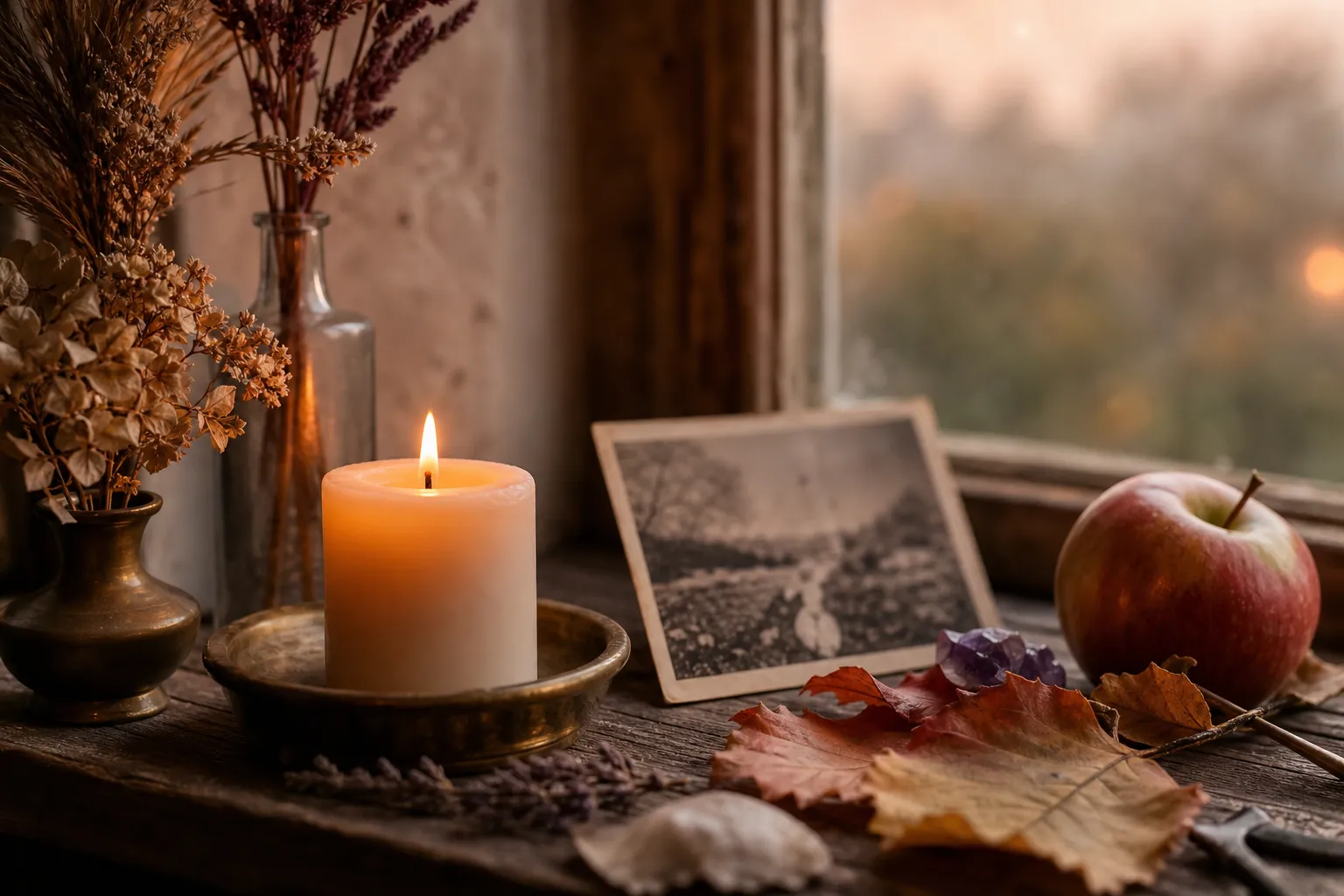
In British and Irish households, Samhain became a night for remembering family who had passed on. Traditionally, people set places at the table for absent loved ones or left small offerings of food and drink. Some maintained a simple ancestor altar: a shelf or corner adorned with photographs, candles, and cherished objects.
Many people today create their own ancestor spaces, perhaps with a lit candle, a favourite food, or seasonal offerings such as apples or autumn leaves. The act need not be elaborate; the heart of it is quiet remembrance and gratitude. You might wish to spend a few minutes in contemplation, recalling stories or names, and letting the gentle glow of a candle connect past and present.
Dumb Suppers: A Meal in Silence
The ‘dumb supper’ is one of the more evocative Samhain customs. Traditionally, a meal was prepared and eaten in total silence, sometimes at midnight. Places were set for the spirits of the dead, who were invited to join. The name comes from the old meaning of ‘dumb’: silent. Such suppers offered a way for families and communities to honour the departed, listen for guidance, or simply sit with memory.
To hold your own dumb supper, prepare a simple meal, lay an extra place and eat in silence. Some write messages to ancestors, placing them under a plate or beside a candle. The quiet can feel both strange and comforting, a pause in the noise of daily life. Afterward, you might reflect or record any thoughts in a journal.
Apple Divination and Other Folk Magic
Apples have long been entwined with Samhain. In British and Irish folklore, apples symbolised knowledge and the otherworld. At All Hallows’ Eve gatherings, apple games abounded: ‘bobbing’ for apples in a basin of water, or trying to peel an apple in a single long strip—then tossing the peel over the left shoulder to see what initial it formed, said to be the first letter of a future sweetheart’s name.
Some would cut an apple crosswise to reveal the five-pointed star within—a symbol of protection and wholeness. Others, by candlelight, would gaze into a mirror while eating an apple, hoping to see a vision of the future. These playful traditions speak to the sense of mystery and possibility that lingers at summer’s end.
Candles in the Window: Welcoming Spirits Home
Lighting a candle in the window at Samhain is a gentle act found both in older records and in modern practice. Traditionally, it served as a beacon for wandering spirits, guiding them home or assuring them of remembrance. In some regions, lanterns were carved from turnips or later pumpkins, warding off mischief or lighting the way for loved ones.
Many people today continue this practice. As dusk falls, a simple candle placed in a safe holder by the window offers a moment of stillness and connection with those who came before. Always remember never to leave a burning candle unattended, and place it away from curtains or flammable objects.
A Simple Samhain Candle Ritual
- Choose a white, black or deep orange candle from our ritual candles selection, and a sturdy candle holder.
- At nightfall on 31 October, set your candle on a windowsill or table. Gather a photograph or token of an ancestor if you wish.
- Take three slow breaths. As you light the candle, speak the names of those you remember or simply say, “For those who have gone before, you are not forgotten.”
- Sit quietly for a few moments, reflecting or sharing memories aloud or in silence.
- When you are ready, extinguish the candle safely, thanking those who have come close. Never leave a candle burning unattended.
If you wish to add divination or folk magic to your evening, you may like to try apple scrying or consult our ritual finder or free tarot reading for further inspiration.
Marking Samhain and All Hallows’ Eve Today
Across Britain and Ireland, Samhain and All Hallows’ Eve are marked in many ways. Some gather for bonfires and storytelling, some for quiet ritual, others by lighting a candle and letting the memory of ancestors warm the room. Modern practices blend old and new, folk custom and personal meaning. However you mark the night, it’s a time for gentle reflection, gratitude, and a sense of kinship with those who walked these paths before us.
For more about the turning of the seasons, see our guide to the Wheel of the Year. To explore the symbolism of crystals often used at Samhain, visit our crystal meanings page, or browse our selection of tumble stones for your altar or ancestor space.
Go deeper with Rowan Hart's complete guide to candle magic: colour meanings, moon timing, and reading the flame and wax.
Questions and answers
What is the difference between Samhain and Hallowe’en?
Samhain is the traditional Celtic festival marking the start of winter and honouring ancestors, while Hallowe’en combines these roots with later Christian and folk customs.
How do I honour ancestors if I don’t know their names?
You can light a candle or set a place for unknown ancestors, and simply hold a moment of gratitude for all who made your life possible.
Is it safe to leave a candle burning overnight for Samhain?
No, never leave a candle unattended. Always extinguish candles before leaving the room or going to sleep.