
In folk magic across Britain and beyond, stones are more than decorative. They are companions, anchors and, sometimes, quiet guardians. Among all the stones said to offer a sense of protection, black tourmaline stands out, wrapped in centuries of story and practice. Today’s guide offers a grounded introduction to black tourmaline and other protective stones, with both the roots of their reputation and simple steps to begin your own work with them.
Black Tourmaline in Folklore and History
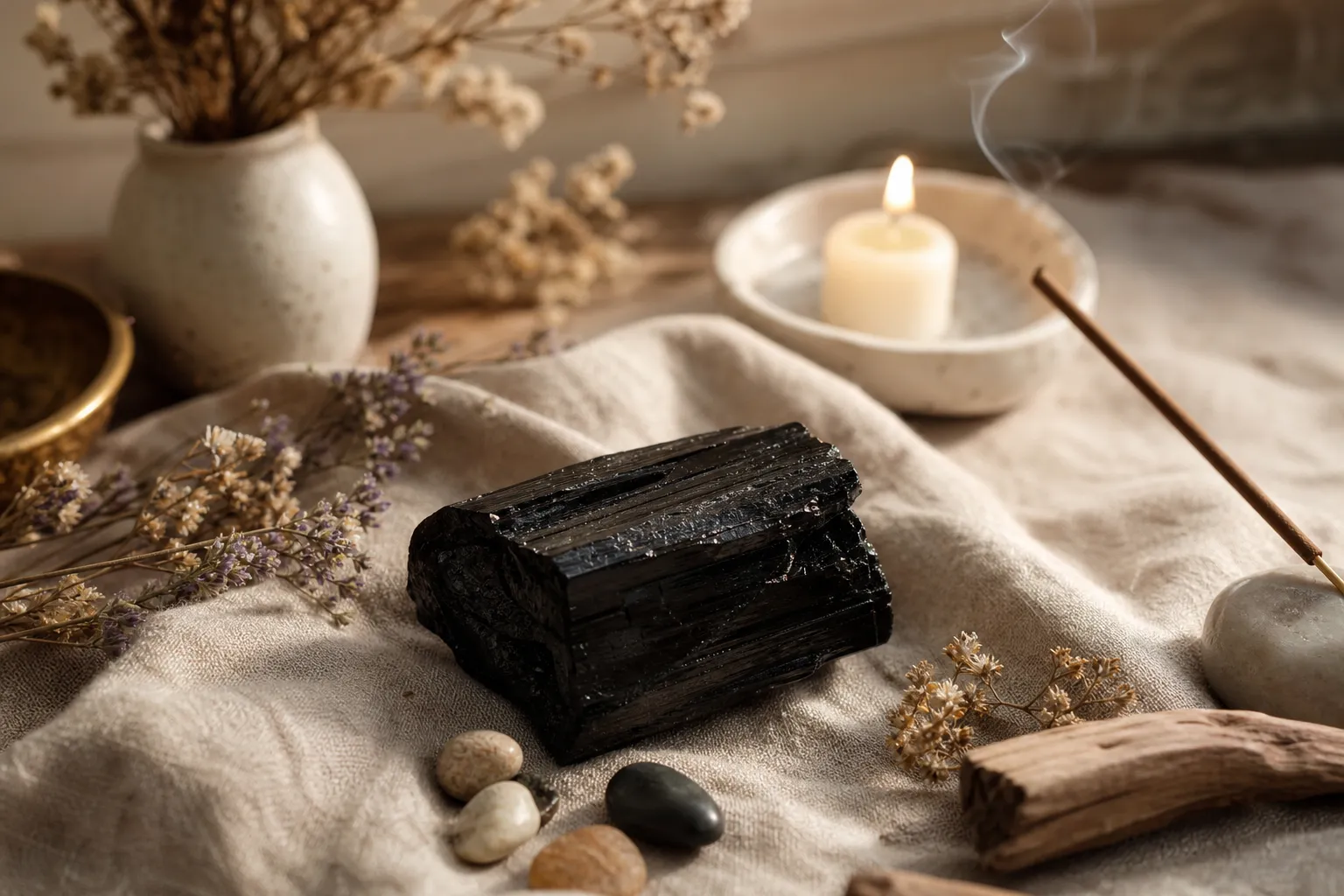
Black tourmaline, sometimes called schorl, is a glossy, coal-dark mineral found in many parts of the world. In British folklore, black stones have long been kept by the hearth or threshold, believed to ward off ill-luck and the evil eye. While there are no medieval texts naming black tourmaline specifically, the practice of using black stones for protective purposes stretches deep into folk tradition.
In the 18th and 19th centuries, miners and rural households often kept a "witch stone"—usually a dark pebble with a natural hole or simply a smooth, black stone—near doorways. The idea was that such stones would absorb or deflect unwelcome energies and ill-wishing. Black tourmaline, with its striking appearance and durability, has found a modern place as a go-to stone for similar purposes.
What Makes a Stone Protective?
Not all stones are regarded as protective. In folklore, those that are black or deep in colour—such as jet, obsidian, and black tourmaline—are said to have a grounding presence, connecting the holder to the earth. Such stones are thought to act as buffers, absorbing or diverting what is unwanted.
Other stones sometimes chosen for protection include smoky quartz, said to offer a gentle shield, and amethyst, which in some traditions is used to keep the mind clear from troubling thoughts. Each stone carries its own associations and stories, and many people today choose by feel or intuition as much as by tradition. For a broader overview, you can explore more about various stones and their meanings with the crystal meanings guide.
How to Choose and Care for a Protective Stone
Choosing a stone is often a matter of personal connection. Some prefer to read about a stone’s historical uses, while others simply notice which one draws their attention. Hold the stone in your hand; notice its weight and surface, how it sits in your palm. Black tourmaline is usually cool and solid, with a subtle sheen.
To care for your stone, keep it somewhere safe when not in use. Many people rest their protective stones on a windowsill, near the front door, or in a pouch. Some like to place them on a small cloth or in a dish. If you wish to dedicate a stone for personal ritual, you might place it on your altar, or keep it with your other tools (see altar tools for ideas). Regularly dust or rinse your stone in plain water and allow it to dry naturally. If you choose to use incense, you can pass the stone through the smoke as part of your own tradition.
Simple Protection Ritual with Black Tourmaline
For beginners, a straightforward ritual can help you connect with your protective stone. This practice is rooted in folk custom, with a few modern touches. You will need a black tourmaline or other protective stone, a white candle, and a quiet space. Remember, whenever you light a candle, never leave it unattended.
- Find a calm place where you can sit comfortably. Place your stone in front of you and set your candle in a safe holder (candle holders).
- Light the candle and take a few slow breaths. Focus on the steady flame. (You can find more about candle meanings and safety at our candle magic guide.)
- Hold the black tourmaline in your hands. Imagine the stone as a small shield, grounded and steady. If you like, say quietly: “May this stone stand as a quiet guard, holding peace at my threshold.”
- Sit for a few more minutes, letting the feeling settle. When you are ready, thank the stone and candle. Extinguish the flame carefully.
- Keep the stone near your front door, work desk, or carry it in a pouch when you feel you need its presence.
Other Everyday Ways to Use Protective Stones
You needn’t keep your stone only for ritual. Many people place black tourmaline or other protective stones in the hallway, on a windowsill, or even tucked into a coat pocket. Some use a group of stones—one at each corner of a room or house—to mark a boundary. Others prefer a single stone, carried quietly.
Pairing your stone with incense can add a layer of tradition and atmosphere. Choose a scent that feels grounding to you; frankincense, myrrh, or sandalwood are often used, though the choice is personal. If you’re curious about incense, our incense collection may offer some inspiration.
Learning More: Stones and the Wheel of the Year
Stones have their place in seasonal folk rituals as well. At times like Samhain or the winter solstice, black stones are often brought to the hearth or laid on the windowsill as a quiet act of warding. If you wish to tie your practice to the turning year, the Wheel of the Year guide can offer a sense of timing and tradition.
For those looking to deepen their connection, you might use a tumble stone for divination, or draw a card from the tarot for further insight. You can learn more about these practices with the free tarot reading or tarot card meanings guides.
Questions and answers
What does black tourmaline do in folk magic?
In folk magic, black tourmaline is kept as a protective stone, said to absorb or deflect negativity and act as a quiet guardian.
How should I use a protective stone?
You can carry it, place it by a doorway, or use it in simple rituals. Many people keep one near the front door or on a windowsill.
Do I need to cleanse my stone?
Some traditions suggest rinsing, dusting or passing the stone through incense smoke. This is a personal choice and can be done as often as you like.