
Introduction to Citrine: Stone of Sunlight and Fortune
Citrine, with its honey-warm hues, has been cherished for centuries as a stone associated with prosperity and good fortune. In the British Isles and beyond, citrine’s golden glow has inspired tales of luck and abundance. Its name comes from the French word for lemon, a nod to its cheerful yellow tones. Today, many people turn to citrine for both its beauty and its reputation in folk magic as a stone that invites bounty, energy and optimism.
This guide explores the history and folklore surrounding citrine, along with practical steps to introduce it into your daily rituals. Whether you are new to crystal work or looking to deepen your understanding, citrine offers a luminous starting point.
Folklore and History: Citrine’s Place in British Magic
Historically, citrine has not always been easily distinguished from other yellow stones, such as topaz. In folklore, it was sometimes called the "merchant’s stone" due to the belief that placing citrine in a cash box or till would attract wealth. Though there is little in the way of formal British folk magic texts mentioning citrine specifically, the broader tradition of using yellow and gold-coloured stones for luck and prosperity is well-documented.
Some Victorian writers noted that citrine was set into jewellery as a sign of sunny disposition and generosity. In Scottish tradition, stones similar to citrine were worn in brooches and rings, valued for their brightness during the dark winter months. Today, many practitioners use citrine in abundance rituals, blending folklore with modern intention-setting.
Understanding Citrine’s Qualities and Modern Meanings
Citrine is a variety of quartz, naturally tinted from pale yellow to deep amber. In modern crystal work, it is often linked with personal power, clear thinking, and the solar plexus chakra. Many people today value citrine for its association with confidence and the ability to "draw in" opportunities. It is also favoured by those seeking to bring more cheer and energy into their homes or working spaces.
It is worth noting that much of the citrine available today is heat-treated amethyst, which shares similar physical properties. Whether natural or heat-treated, citrine continues to be used in both decorative and ritual contexts for its warm, inviting energy. For a deeper dive into qualities and meanings, you might wish to explore the crystal meanings guide.
How to Use Citrine for Abundance: Simple Rituals
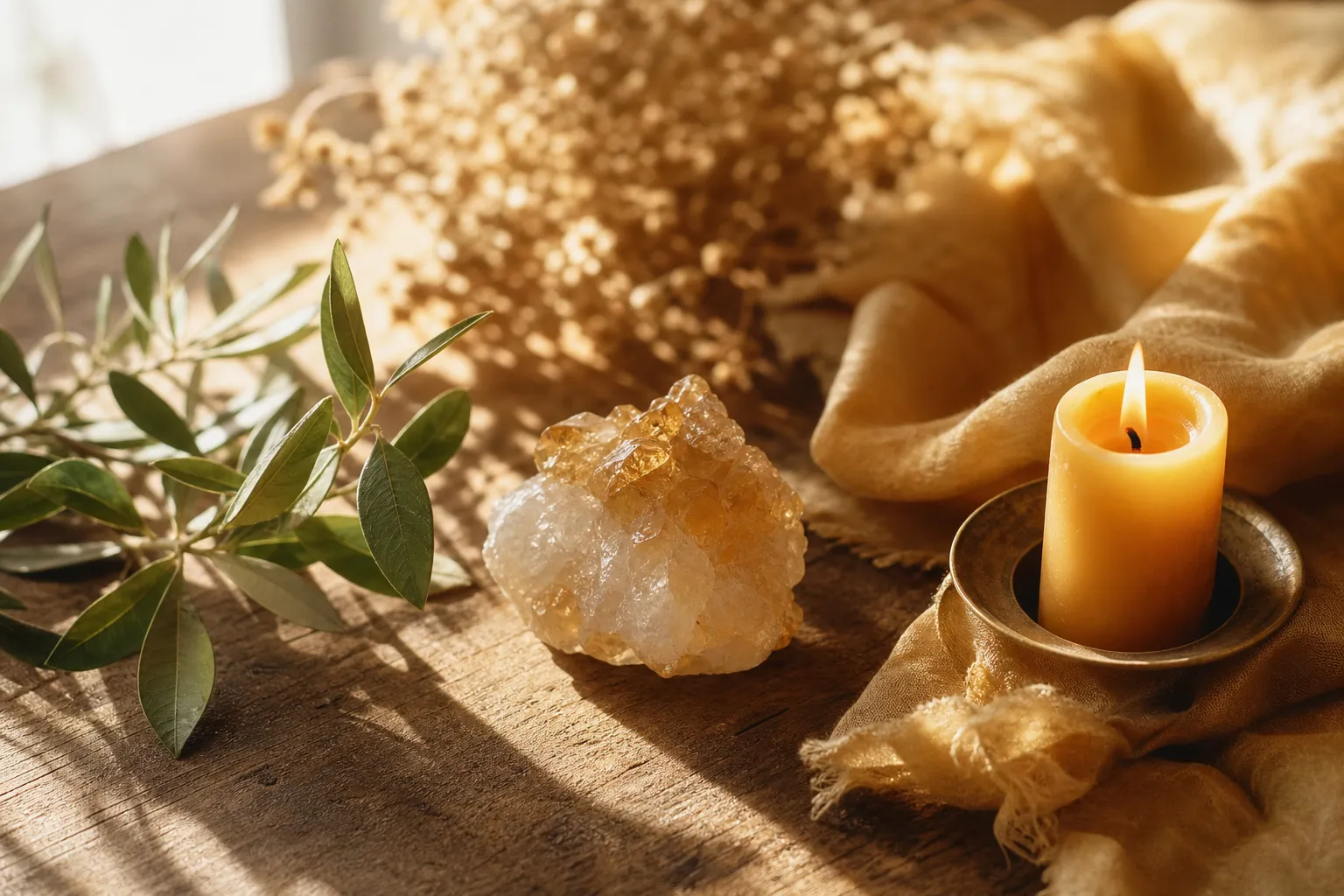
Inviting abundance with citrine can be as straightforward or as ceremonial as you wish. Many people like to keep a piece of citrine in a purse, wallet, or on their desk as a quiet charm. Others prefer to work with citrine in more intentional ways, such as in candle magic or on an altar. Here is a beginner-friendly ritual for abundance using citrine and a candle:
- Choose a piece of citrine and a small yellow or gold candle. Place them together on a clean, flat surface. (Find ritual candles here.)
- Before you begin, take a moment to tidy the space and ground yourself. Breathe deeply and focus on your intention for abundance—perhaps a goal, opportunity, or simply a wish for brighter days.
- Light the candle, always keeping safety in mind and never leaving it unattended. As the flame burns, hold the citrine in your hand or place it beside the candle.
- Visualise the candle’s golden light merging with the stone, filling your space with warmth and plenty. You might wish to say a few words, such as: "May this light invite abundance, as the sun returns after rain."
- Allow the candle to burn for a short while, then snuff it out. Carry the citrine with you or keep it in a place where you handle money or make decisions.
For more ideas on working with candle magic, explore the candle magic guide or try a personal candle spell by Rowan Hart.
Combining Citrine with Other Abundance Practices
Citrine works well alongside other traditional abundance practices, such as keeping a tidy entranceway, honouring the waxing moon, or tending to a small altar with meaningful objects. In folk tradition, the waxing moon has often been seen as a time for increase and growth. Placing citrine on your altar or windowsill during this phase is a simple way to blend stone lore with the rhythms of nature. For a current moon calendar, see here.
You can also pair citrine with incense or sound, such as gentle chimes or a singing bowl, to mark the opening or closing of a ritual. The stone’s bright colour makes it a cheerful addition to seasonal displays, especially during harvest festivals or at the turning of the year (Wheel of the Year).
Caring for Citrine and Reflecting on Abundance
Looking after your citrine is easy. Simply dust it occasionally and, if you wish, place it in sunlight for a short period to refresh its brightness. Some like to rinse citrine in cool water, but always check if your stone is untreated and suitable for this. However you choose to care for it, let the act become a gentle reminder to notice abundance in daily life—be it a warm cup of tea, a kind word, or the first crocus of spring.
As with all folk magic, working with citrine is as much about the attitude you bring as the actions you take. A stone on its own is not a guarantee; rather, it serves as a symbol and companion as you move through the world.
Questions and answers
Is citrine always naturally yellow?
Not always. Much of the citrine on the market is heat-treated amethyst, which has a similar appearance and energy.
How should I clean my citrine?
You can dust it gently and, if the stone is untreated, rinse with cool water. Brief exposure to sunlight can refresh its brightness.
Can I use citrine with other stones?
Yes, citrine pairs well with other stones associated with abundance, such as green aventurine or pyrite.