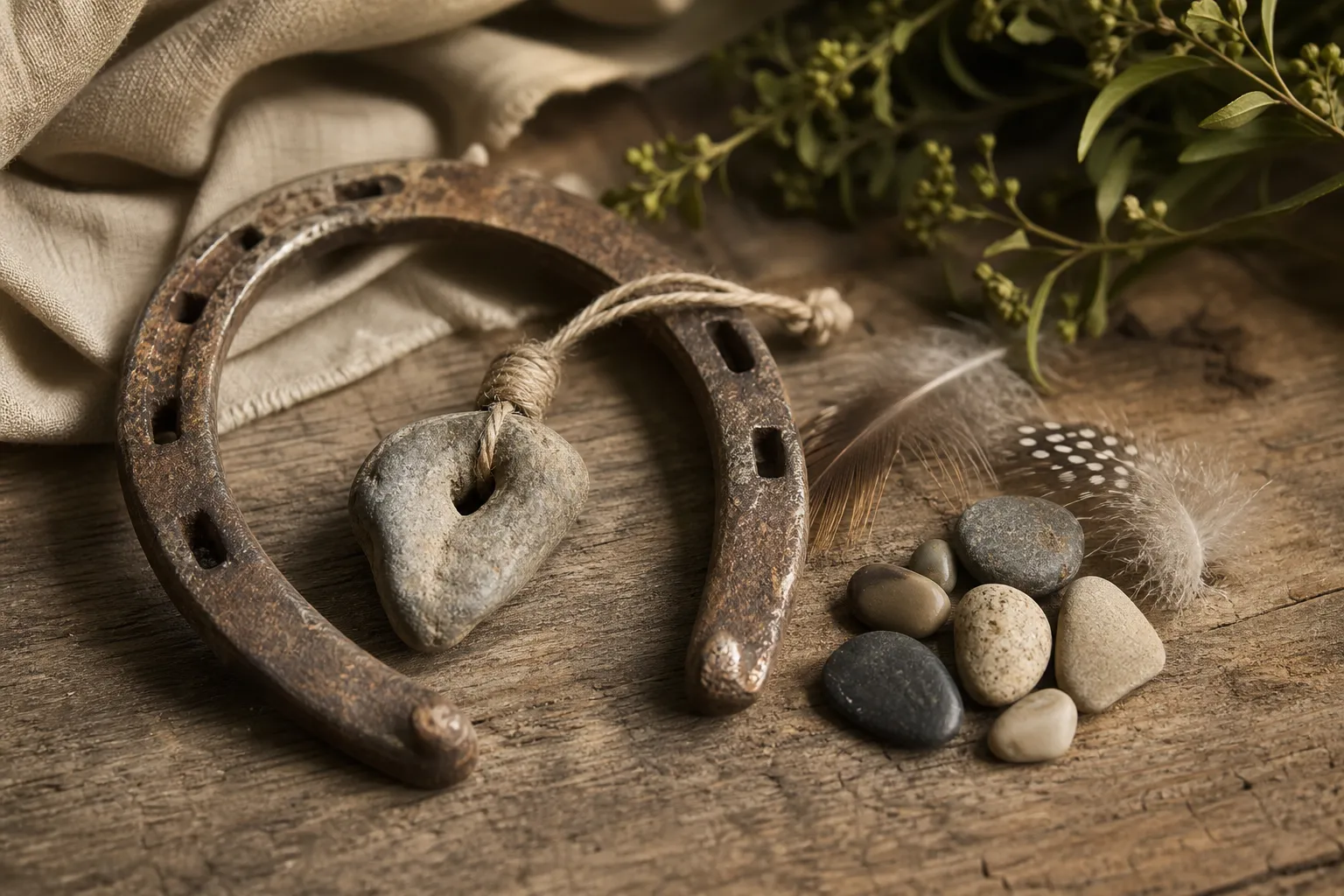
There’s a quiet magic in the ordinary objects we pass by every day. Horseshoes hung above a door, a hagstone threaded on cord, a curious pebble in a pocket: these small tokens have roots deep in British folk custom, where luck, protection and intention interweave. Today, many still keep these charms close, whether for tradition or a gentle sense of connection to the land and its stories. Here, we look at the histories, lore and simple rituals around horseshoes, hagstones and other luck charms—practical guidance for those just beginning to explore these old ways.
The Horseshoe: Iron, Luck and Protection
Horseshoes are perhaps the most recognisable lucky charm in Britain. Traditionally made of iron—a metal believed in folklore to turn away ill-wishing and faerie mischief—horseshoes have been fixed above thresholds for centuries. Some say this custom dates back to the Middle Ages, when blacksmiths were thought to wield special knowledge and iron itself was valued for its strength and rarity.
In practice, a horseshoe is often nailed above a doorway, ends facing upwards like a cup to 'hold' luck. Others prefer the ends pointing down, letting luck pour onto those who enter. There is no single right way: local traditions differ, and personal preference shapes the meaning. In some areas, finding a cast-off horseshoe—especially one found rather than bought—is considered particularly fortuitous. When placing a horseshoe, it is common to use old nails and to thank the spirit of the horse for its gift.
Hagstones: Stones with a Hole for Seeing and Safekeeping
Hagstones, also known as adder stones or witch stones, are naturally holed pebbles, usually found along riverbanks or beaches. In British folklore, such stones were prized for seeing through enchantments, protecting against ill-wishing, and keeping nightmares away. To be considered a true hagstone, the hole must be formed by water or weather, not drilled by human hands.
Folklore tells us that looking through the hole of a hagstone could reveal hidden faerie folk or spirits, and that threading one on a cord and hanging it near the bed or around the neck could keep harmful influences at bay. Some people today keep a hagstone on their keyring or above their door, or use one in ritual as a focus for intention. Finding a hagstone is often seen as a sign in itself—a quiet nudge from the natural world to pay attention to subtle things.
Other Luck Charms in British Folk Magic
Beyond horseshoes and hagstones, British folk tradition is rich in everyday objects turned amulets. A sprig of rowan tied with red thread, a coin with a hole in it, or a found feather might all carry a sense of luck or protection. The charm often lies not in the object itself but in the intention with which it is kept or given.
Many people today choose a small stone, shell, or token that feels significant and carry it in a pocket or pouch. Some prefer to keep such charms on an altar or special shelf, alongside candles or crystals. The key is personal meaning: what matters is the story you weave around the charm—how you found it, what it reminds you of, and the quiet ritual of carrying or placing it with care.
Practical Ritual: Preparing and Placing a Horseshoe for Luck
- Find a horseshoe, ideally one you have found yourself or received as a gift. Gently brush off any dirt; some like to leave it as found, while others prefer a light rinse with water.
- If you wish, hold the horseshoe in your hands and quietly thank the horse and the land for the gift. Set an intention for what you hope the horseshoe will bring—be it luck, protection, or a sense of welcome.
- Choose where to hang your horseshoe. Traditionally, it is placed above the main entrance, but it could also be fixed in a porch, shed or even inside above a hearth.
- Use old nails if possible, or natural cord if you prefer not to make holes in the wall. Fix the horseshoe with the ends up (to hold luck) or down (to pour luck over those who enter), according to your preference.
- Light a candle nearby as you hang the horseshoe, taking a quiet moment to focus on your intention. Always remember never to leave a burning candle unattended.
- If you like, finish by saying a few words of thanks, or by touching the horseshoe each time you pass beneath it as a small daily ritual.
Luck Charms and Modern Practice
Many people today combine old lore with new traditions, choosing charms that speak to them personally. Some keep a tumble stone or crystal for luck; others use a ritual candle or incense to mark the placing of a new charm. The Wheel of the Year offers natural times for renewal—such as spring’s fresh start or autumn’s reflection—when charms might be cleaned, moved or rededicated. You can find more about these seasonal shifts in our Wheel of the Year guide.
Curiosity, respect and a sense of quiet attention are good companions as you explore these customs. Whether you follow a well-trodden path or create your own ritual, luck charms can serve as gentle reminders of connection—to place, to story, and to the small magics of daily life.
Questions and answers
Does it matter which way up I hang a horseshoe?
Traditionally, some hang it with the ends up to hold luck, while others hang it ends down to pour luck over those who enter. Choose what feels right for you.
How do I find a real hagstone?
Look along riverbanks or shingle beaches for naturally holed stones, especially after rain or high tide. The hole must be formed by nature, not drilled.
Can I use a modern object as a luck charm?
Yes; what matters most is your intention and personal meaning. Many people today choose objects that feel significant to them.