
Among the quiet corners of British folk magic, few practices have endured with such quiet resolve as the making of witch bottles and protective charms. These small acts, carried out in kitchen and hearth, speak to the everyday magic woven into home life. For those new to witchcraft or curious about its traditions, witch bottles and charms offer a gentle way to begin, rooted in both history and practicality.
Witch Bottles in British Folklore
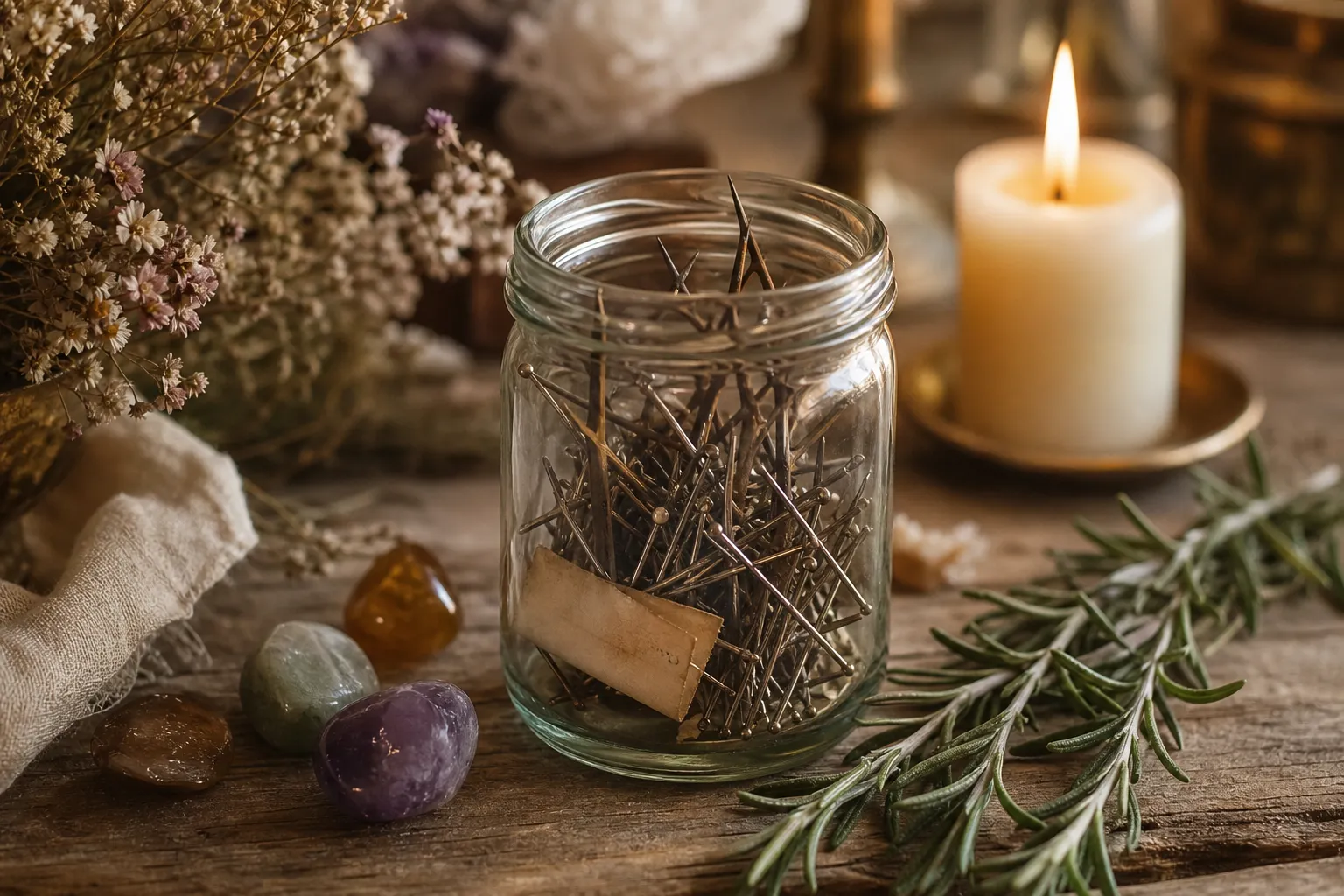
The witch bottle is an old form of protective magic, with examples found in the foundations of cottages and beneath hearthstones across England. Traditionally, these bottles were made to guard against ill-wishing, malice or what was once called the evil eye. The earliest documented witch bottles date to the 17th century, often made from stoneware or glass and containing a mixture of personal or household items—sometimes pins, nails, and even hair or nail clippings.
In folklore, the purpose of the bottle was to attract and trap negative intentions, which would then be neutralised by the sharp or tangled contents within. It was believed that the bottle’s power was strongest when hidden in a secret spot—under a doorstep, buried in the garden, or inside a chimney breast. While much of the old superstition has softened with time, many people today create witch bottles as a symbolic act to set boundaries and invite a sense of safety at home.
Protective Charms: From Horseshoes to Hag Stones
Charms for protection are part of everyday British tradition. The horseshoe nailed above a door, the hag stone (a naturally holed pebble) strung on a ribbon, and the bramble wreath woven at Samhain are all echoes of a folk belief that certain objects can deflect ill luck or unfriendly spirits. In some regions, salt was sprinkled at thresholds, or sprigs of rowan were hung in stables and living rooms.
Though the origins are sometimes lost to time, the intention behind these charms remains unchanged: a desire for peace, luck, and shelter from harm. Today, many people combine these old customs with personal touches—perhaps adding a favourite tumble stone or small bell to a charm for the front door, or placing a bowl of sea salt on a windowsill during a period of change.
Choosing and Creating Your Own Witch Bottle
To begin, it helps to approach the task with thoughtfulness and a sense of purpose. Your bottle need not be elaborate; a small glass jar will do. Consider what you wish to protect—your home, your relationships, your own quiet mind—and let this guide your choice of contents. Traditionally, sharp or tangled items such as pins, thorns, or broken pottery were included, but you might also add dried rosemary, a coin for luck, or a slip of paper with a written intention.
Many people today include symbolic items such as crystals or a few drops of essential oil for scent and personal meaning. The act of sealing the bottle—either with wax from a ritual candle (always take care, and never leave a candle unattended) or with a tightly closed lid—marks the end of the process. The bottle is then hidden in a place that feels right: a cupboard, garden border, or beneath the porch.
How to Make a Simple Witch Bottle
- Gather your materials: You will need a small jar or bottle, sharp or tangled items (such as pins, nails, or thorns), a personal token (hair, thread, or a slip of paper with your intention), and optional additions such as salt, dried herbs, or a tumble stone.
- Prepare your space: Find a quiet moment. If you like, you may wish to light a candle (always supervise the flame) or burn a little incense to mark the occasion.
- Assemble the bottle: Layer the items thoughtfully, focusing on your wish for protection or peace. If you have written an intention, fold it and place it inside.
- Seal the bottle: Close the lid tightly. If using wax, drip it carefully around the stopper, taking extra care with the hot wax. Remember to extinguish any candles before leaving the room.
- Hide or place the bottle: Tuck it away in a corner, under the doorstep, or in the garden. Some choose to bury the bottle; others keep it on a quiet shelf. If you prefer not to hide it, a windowsill or behind a cupboard will serve.
As with much folk magic, what matters is the intention and attention given to the act, rather than strict adherence to any formula.
Charms for Everyday Protection
Charms need not be complicated or secret. A small pouch with a tumble stone, a feather found on a walk, or a coin from a meaningful year can be tied with red thread and hung by a door. In some households, a sprig of rosemary or rowan is still placed above the threshold. These tokens serve as gentle reminders of your wellbeing and the small rituals that anchor daily life.
If you are drawn to the turning of the seasons, you might wish to align your protective work with one of the Wheel of the Year festivals, or time it by the moon calendar. Whether you mark the moment with a simple gesture or a more elaborate ritual, let it be shaped by what brings you comfort and meaning.
Further Resources and Inspiration
If you would like to explore more, you may find inspiration in our ritual finder, learn about the meanings of different crystals, or create a personal candle ritual using Rowan Hart’s candle spell. The old ways are meant to be lived and adapted, finding a home in your own hands.
Questions and answers
What is the purpose of a witch bottle?
Traditionally, witch bottles were made to protect the home from negativity or ill-wishing by trapping harmful intent.
Where should I hide a witch bottle?
Common places include beneath steps, in the garden, or in a cupboard. Choose a spot that feels private and meaningful to you.
Can I use modern items in a protective charm?
Yes, many people today include items like crystals, coins or personal tokens alongside traditional objects.