






















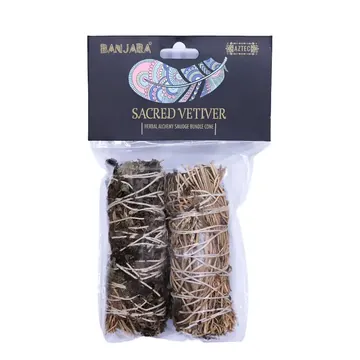
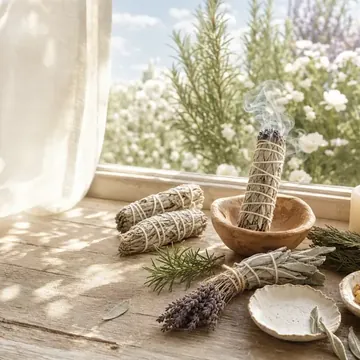
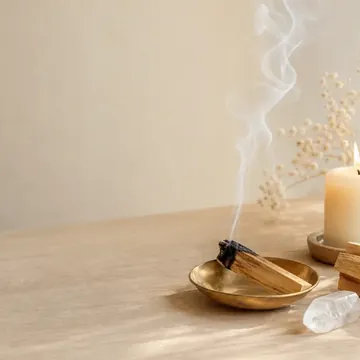

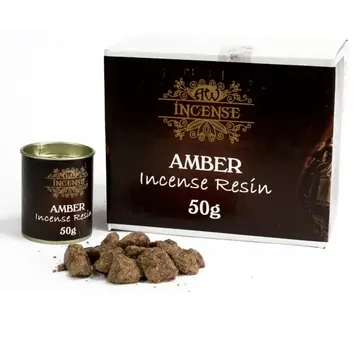

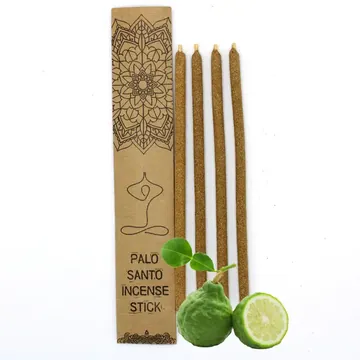





































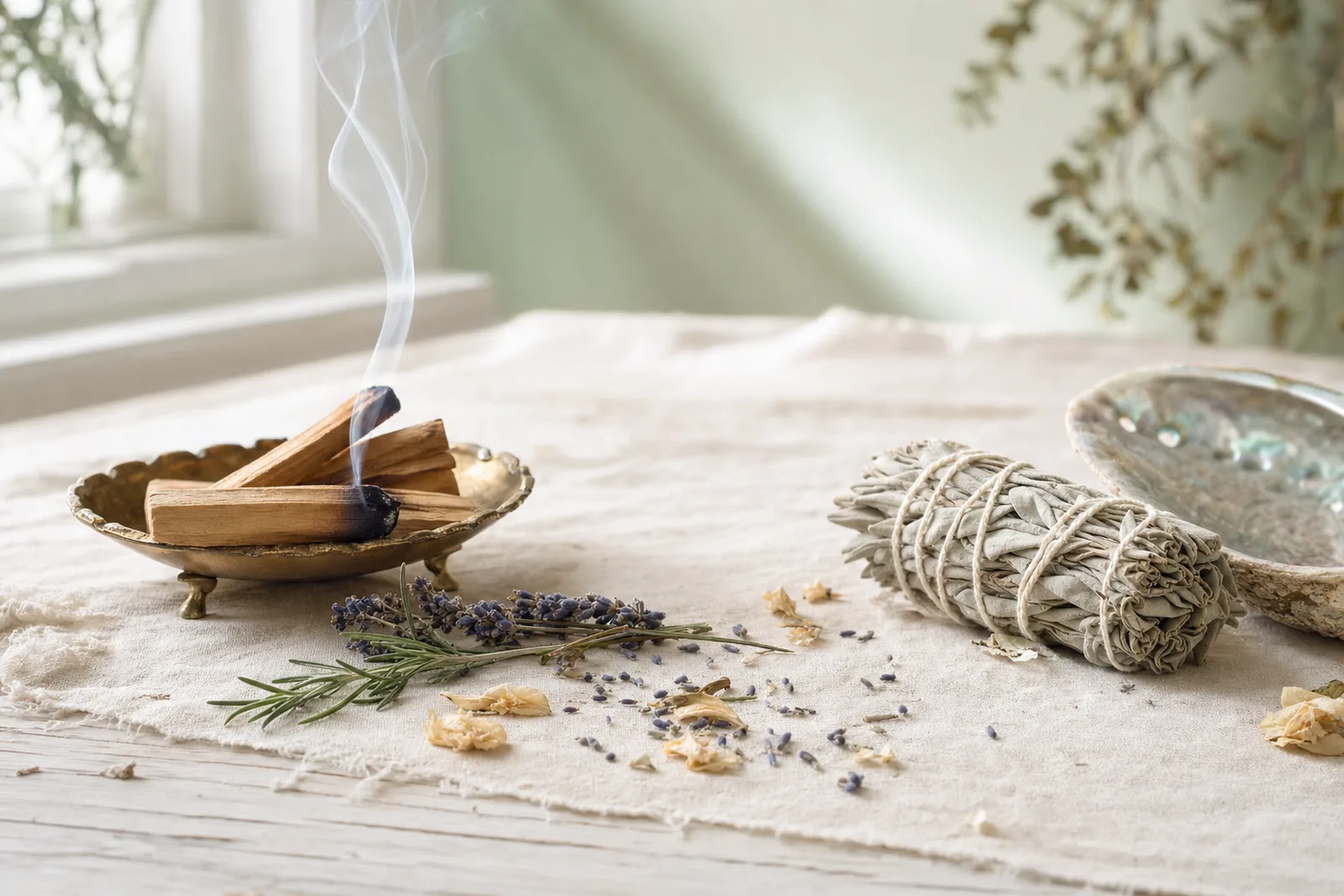
Palo santo is a sweet-smelling wood from South America with a soft, gentle smoke; white sage is a sharp, herbal desert plant from California with a thick, strong smoke. Sage is traditionally used to clear a space, palo santo to sweeten and bless it. If you want one for everyday use, choose palo santo for its gentler scent; for a deep reset after an argument, an illness or a move, many people use sage first and palo santo afterwards. Whichever you choose, buy naturally fallen palo santo and cultivated (not wild-picked) white sage.
Palo santo vs white sage at a glance
| Palo santo | White sage | |
|---|---|---|
| What it is | Aged heartwood of Bursera graveolens, a relative of frankincense and myrrh | Dried leaves of Salvia apiana, an evergreen desert shrub |
| Where it grows | Dry tropical forests of Ecuador, Peru, Central America and Mexico | Coastal sage scrub of southern California and Baja California |
| Scent | Sweet, warm and woody, with citrus, pine and mint | Sharp, green and herbal, slightly camphorous |
| Smoke | Light, gentle, fades quickly | Thick, strong and lingering |
| How it burns | Smoulders for 30 to 60 seconds, relit many times | A bundle smoulders steadily while you walk |
| Traditionally used to | Sweeten, bless, invite calm and good energy | Clear, cleanse and reset a space |
| Best for | Daily rituals, meditation, before a tarot reading | Deep cleansing: a new home, after illness or upset |
| Conservation | Least Concern, but buy only naturally fallen wood | Wild plants are poached; buy cultivated sage |
| Gentler option | Palo santo oil in a diffuser | Sage spray or cultivated garden sage |
What is palo santo?
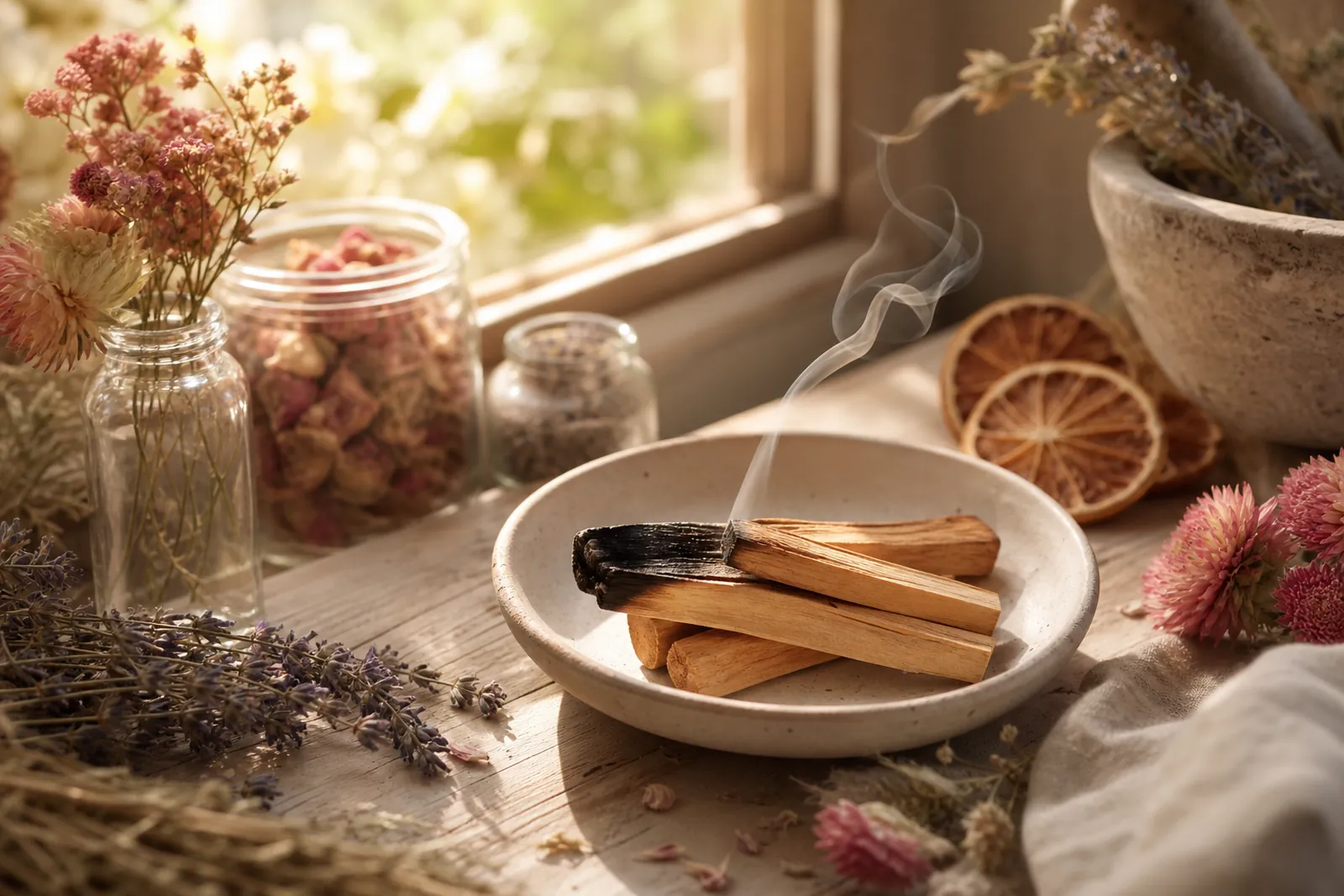
Palo santo means "holy wood" in Spanish. It comes from Bursera graveolens, a small tree of the dry forests along the Pacific side of South America, especially Ecuador and Peru, and north through Central America to Mexico. It belongs to the same plant family as frankincense and myrrh, which explains its resinous, almost sacred scent.
The magic happens after the tree dies. As fallen branches and trunks rest on the dry forest floor for several years, the heartwood becomes rich in aromatic oils, including limonene, the same compound that gives citrus peel its brightness. That is why good palo santo smells sweet even before you light it, and why wood cut from a living tree barely smells at all.
In the Andes and across Latin America, palo santo has long been burned in homes, at healers' tables and in ceremonies to clear heavy energy and bless a space, and today it is loved around the world as a softer, sweeter alternative to sage.
What is white sage?
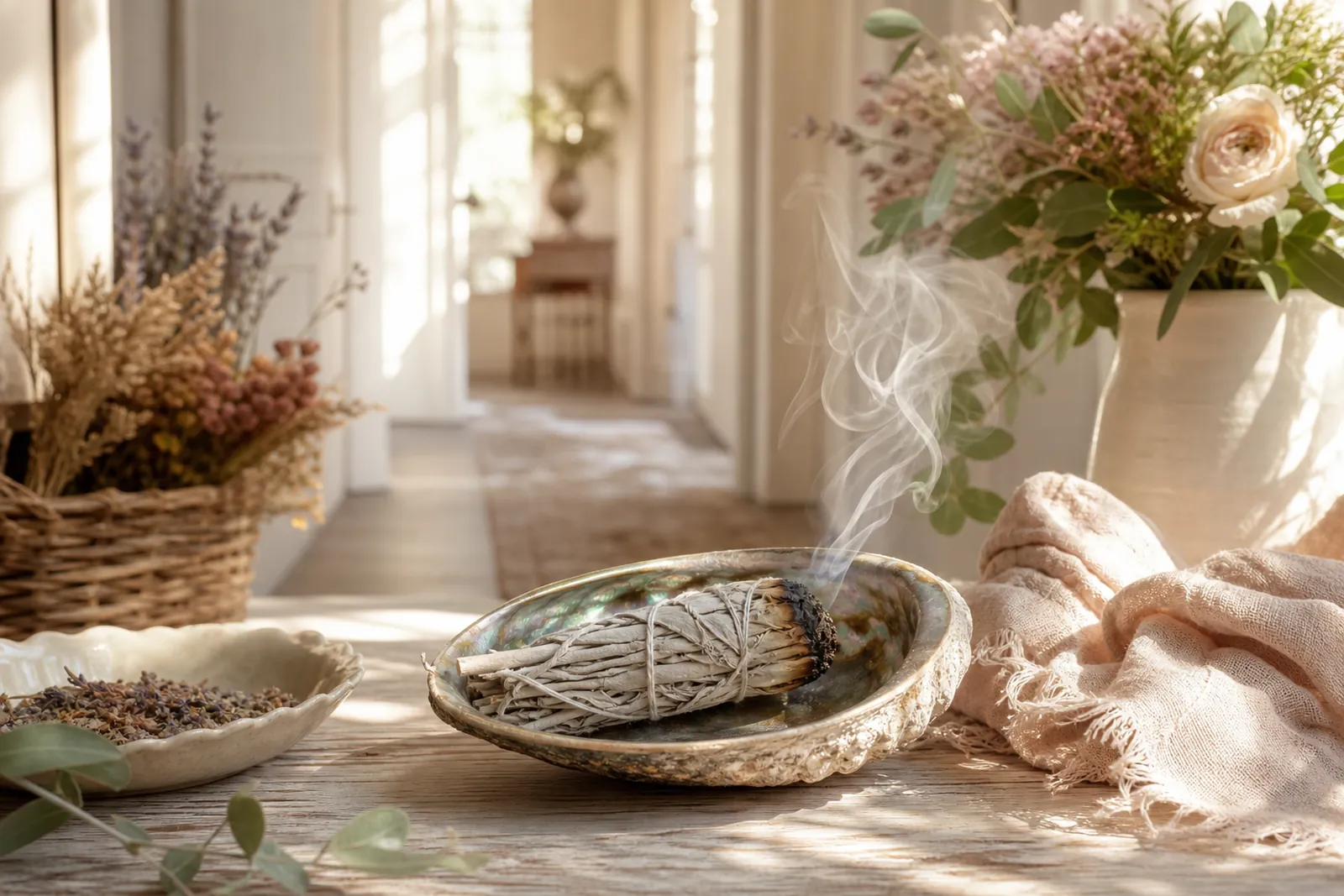
White sage, Salvia apiana, is a silvery-leaved shrub native to the coastal sage scrub of southern California and Baja California. Its leaves are full of strong-smelling oils, which give it a sharp, clean, herbal scent quite unlike the sage in your kitchen.
For many California Native peoples, white sage is a sacred plant used in prayer and ceremony. Its popularity elsewhere is much more recent: bundles of white sage, often called smudge sticks, became widespread through the wellness boom of the last few decades.
Which one should you choose?
Choose palo santo if…
- you want a gentle, sweet scent you can enjoy every day
- you are lighting something before meditation, yoga, journalling or a tarot reading
- you live in a small space or are sensitive to heavy smoke
- you want to invite something in: calm, creativity, warmth, a fresh start
Choose white sage if…
- you are moving into a new home and want a deep, thorough clear
- the atmosphere feels heavy after an argument, illness, a difficult visit or a long winter
- you prefer a sharper, cleaner, herbal scent
- you want to clear something out before you begin again
Or use both, in order
The classic pairing is sage first, then palo santo. Clear the space with white sage, letting the smoke drift into corners and doorways with a window open. When you have finished, light a stick of palo santo and walk the same path, sweetening the room and setting your intention for what you would like to welcome in. Our palo santo collection and smudge sticks have everything you need.
How to burn palo santo
- Open a window a little so the smoke has somewhere to go.
- Hold the stick at a 45-degree angle and light the tip with a match or candle for 30 to 60 seconds.
- Blow out the flame gently. The tip will glow and release a ribbon of sweet smoke.
- Walk slowly around the room or simply sit with it, holding a dish underneath for embers.
- Rest it in a heat-proof dish or shell. It will go out on its own; relight it next time.
How to burn white sage
- Open a window or door, traditionally to give unwanted energy a way out.
- Light the tip of the bundle and let it catch for a few seconds, then blow it out so it smoulders.
- Move slowly around the room, letting the smoke reach corners, doorways and behind furniture, holding a dish beneath to catch falling leaves.
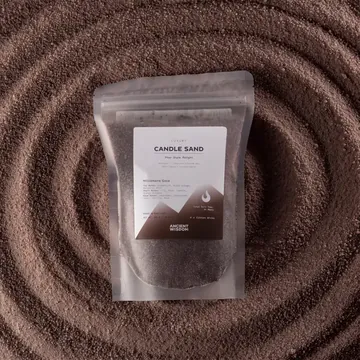
- When you have finished, press the tip firmly into sand or a heat-proof dish until it is completely out.
For a step-by-step ritual with words to say, see how to smudge your home.
Is palo santo endangered?
No, but the details matter. Bursera graveolens, the palo santo sold as sticks, incense and oil, is assessed as Least Concern on the IUCN Red List. Peru once listed it as critically endangered and banned cutting living trees, allowing only naturally fallen wood to be collected; it has since come off that list, but Peru's forest authority still regularly seizes illegally cut palo santo.
Much of the confusion online comes from a completely different tree also called palo santo, Bulnesia sarmientoi, from the Gran Chaco of Paraguay, Argentina and Bolivia. That tree is endangered and its trade is controlled under CITES, but it is not the wood sold as palo santo sticks.
So: palo santo is not endangered, but naturally fallen, legally gathered wood from an established maker is the only kind worth buying.
Is white sage endangered?
White sage is not formally listed as endangered, but wild plants in California have been heavily poached to meet demand, damaging fragile hillside habitats and the plants Native communities rely on for ceremony. Many Native voices have asked buyers not to use wild-harvested white sage.
The answer is simple: choose white sage that has been cultivated, grown on farms for the purpose, or try a different herb altogether.
Using them with respect
Both plants come from living traditions, and the kindest way to use them is thoughtfully: know where your wood or herbs come from, use a little at a time, and treat lighting them as a moment of intention rather than an air freshener. Many people prefer to call what they do "cleansing" or "clearing a space" rather than "smudging", a word closely tied to specific Native ceremonies.
British alternatives from the hedgerow
Long before palo santo and white sage reached our shops, Britain had smoke traditions of its own, and you can still follow them today:
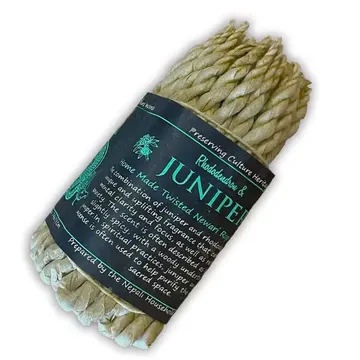
- Juniper: in Scotland, juniper was burned on New Year's morning in a custom called saining, carried through the house to bless it for the year ahead.
- Rosemary: the herb of remembrance, long burned or hung by the door for protection and clarity.
- Bay: laurel leaves were burned for good fortune and to keep a house safe.
- Garden sage: ordinary culinary sage, dried in bundles, gives a softer herbal smoke and is easy to grow yourself.
These make lovely companions to palo santo, and a beautiful way to bring a little hedge magic into your home. Read more in our guide to hedge magic.
Safety for both
- Always burn in a ventilated room and never leave smouldering wood or herbs unattended.
- Use a heat-proof dish, shell or sand, and keep away from curtains and anything that could catch.
- Keep smoke away from children and pets, especially birds, which are very sensitive to any smoke.
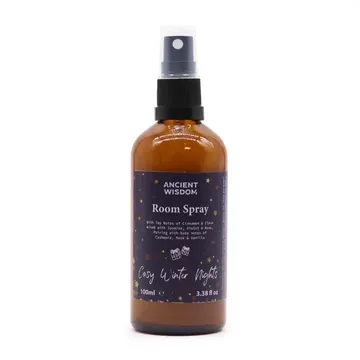
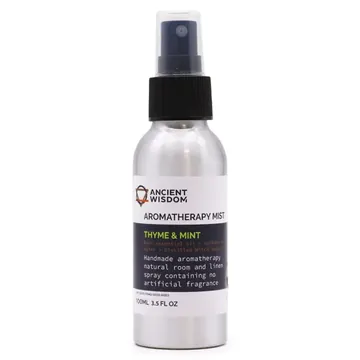
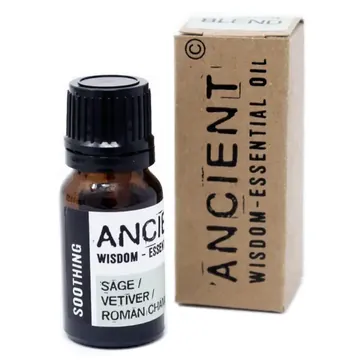
- If you have asthma or are sensitive to smoke, try palo santo oil in a diffuser or a cleansing room spray instead.
Shop our full range of palo santo sticks, incense, resin and oil.
Questions and answers
Is palo santo better than sage?
Neither is better, they do different jobs. White sage has a strong, sharp smoke traditionally used to clear a space, while palo santo is soft and sweet and traditionally used to bless it and invite good energy. Many people use sage first and palo santo afterwards.
Can I use palo santo and sage together?
Yes. The classic order is sage first to clear the space, then palo santo to sweeten it and set an intention for what you would like to welcome in.
Which smells nicer, palo santo or sage?
Most people find palo santo the more pleasant everyday scent: sweet, warm and woody with citrus and mint. White sage is sharper and more herbal, a little like a camphor-scented hillside.
Is palo santo endangered?
No. Bursera graveolens, the palo santo used for sticks and incense, is assessed as Least Concern by the IUCN. A different tree also called palo santo, Bulnesia sarmientoi, is endangered, which causes the confusion. Buy only naturally fallen wood from an established maker.
Is it OK to use white sage if I am not Native American?
White sage is sacred to many California Native peoples, and wild plants have been heavily poached. If you use it, choose cultivated white sage, use it respectfully, and consider British alternatives such as rosemary, juniper or garden sage.
How long does a palo santo stick last?
A single natural stick can be relit dozens of times, smouldering for 30 to 60 seconds each time, so one stick usually lasts weeks of regular use.
Why does my palo santo keep going out?
That is how it should burn. Palo santo smoulders briefly and then goes out on its own; simply relight it when you want more smoke.
What can I use instead of palo santo or white sage?
Juniper, rosemary, bay and garden sage all have long histories of being burned for blessing and protection in Britain. Palo santo oil in a diffuser or a cleansing room spray gives the scent without any smoke.