






















































Long before anyone spoke of hedge witches, the villages and market towns of Britain had their cunning folk. They went by many names: cunning men and wise women, charmers, conjurors, wizards, and in Wales the dyn hysbys, the knowing one. Their neighbours went to them for help with the troubles of ordinary life, and their memory lives on in the quiet, practical magic many hedge witches follow today.
This guide tells their history, keeping documented fact and later legend clearly apart. For more stories and every hedge magic guide in one place, visit our Hedge Magic page.
Who were the cunning folk?
Cunning folk were people, often in rural areas, who offered magical services to their community for a fee or a gift. They were found across England, Wales, Scotland and Ireland from at least the medieval period into the early twentieth century. Some were well known across whole counties; others served a single village.
Importantly, they did not usually think of themselves as witches. In fact, one of their most requested services was protection against witchcraft. To their clients, the cunning man or wise woman was on the side of good, a person who could find out what was wrong and set it right.
What did people ask them for?
Historians, especially Owen Davies in his book Cunning-Folk: Popular Magic in English History, have pieced together what cunning folk actually did. The most common requests were:
- Finding lost or stolen things. A missing ring, a stolen horse or a vanished purse of money. Some cunning folk used a sieve and shears, a key in a Bible, or a looking glass to divine the culprit.
- Protection from witchcraft and ill luck. Charms written on paper, witch bottles, and advice on keeping the household safe.
- Love and the future. Fortune telling, astrology and love divination were all popular, especially among young people.
- Help with animals and the farm. When a cow gave no milk or butter would not churn, it was often blamed on bad luck that a charmer could lift.
- Treasure hunting. Some cunning men claimed they could find buried treasure, though this rarely ended well for their clients.
Books, charms and written spells
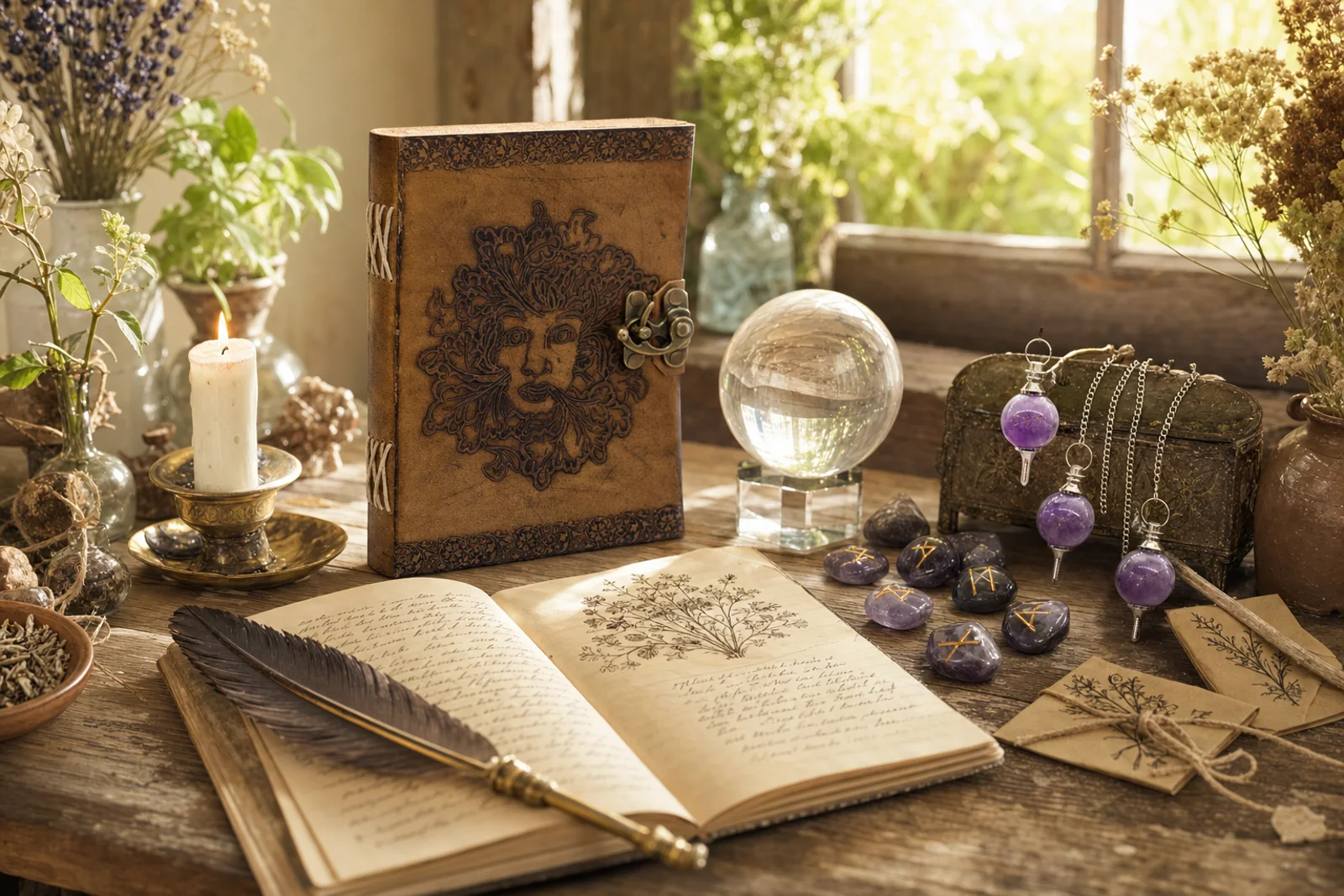
Many cunning folk could read and write when many of their neighbours could not, and books were part of their power. They owned astrological almanacs and books of magic, and copied charms onto scraps of paper for clients to carry or hide in the house. In Wales especially, written charms were sometimes folded and kept for generations. Several of these papers survive in museums today.
The cunning folk and the law
The law treated magic seriously for centuries. Witchcraft Acts were passed in England in 1542, 1563 and 1604, and under them people could be prosecuted for harmful witchcraft. Cunning folk sometimes found themselves in court, though far more often it was their accusations against others that caused trouble.
The Witchcraft Act of 1736 changed things. It no longer treated witchcraft as real. Instead it punished people who pretended to use magic, as a kind of fraud. Later, the Vagrancy Act of 1824 was also used against fortune tellers. Even so, cunning folk carried on working quietly in many places well into the 1800s and beyond.
Some famous cunning folk
A few names have come down to us with real documentary records behind them, though legends have grown around them all.
- James "Cunning" Murrell (1785 to 1860), Hadleigh, Essex. A cunning man known for making witch bottles, telling fortunes and helping people who believed they had been bewitched. Many stories about him were collected after his death, so some are probably exaggerated.
- John Harries of Cwrt-y-cadno (died 1839), Carmarthenshire. A famous Welsh dyn hysbys, said to have kept books of magic and astrology. His family continued the practice after him.
- Biddy Early (about 1798 to 1874), County Clare. An Irish wise woman visited by people from far and wide, famous for a blue bottle she was said to look into. Her story was recorded by folklorists, including Lady Gregory.
- Tamsin Blight (died 1856), Cornwall. A well-known Cornish "pellar", the local name for a cunning person, consulted by many in the Helston area.
Some other famous figures belong more to legend than to history. Mother Shipton, the prophetess of Knaresborough, is a good example: a pamphlet of her prophecies was printed in 1641, but many of the most famous "predictions" credited to her were written long after, some as late as the 1860s.
Why cunning folk disappeared
Over the nineteenth and early twentieth centuries, cheaper newspapers and almanacs, wider schooling, local doctors and vets, and the spread of police forces all changed village life. People had other places to turn, and the cunning folk slowly faded. By the early twentieth century, only a few remained, mostly in remote areas.
The cunning folk and hedge witches today
Modern hedge witches are not the same as historical cunning folk, and it is worth being honest about that. But many feel a kinship with them: a solitary, practical magic, rooted in a particular place and season, focused on the home, luck and protection, and passed on through notebooks rather than grand ceremonies.
If you would like to follow in that spirit, keep a notebook of charms and seasonal notes, learn the folklore of your own area, and visit your local museum, where you may find witch bottles, written charms or concealed shoes found in old houses nearby. Our guides to British protection charms and traditional spells for beginners are good next steps.
Questions and answers
What is a cunning man or cunning woman?
A cunning man or woman was someone in a British village or town who offered magical help to neighbours, usually for a small fee: finding lost property, telling fortunes, offering protection from bad luck and writing charms. They were active from at least medieval times into the early twentieth century.
Were cunning folk witches?
Usually not in their own eyes or their neighbours'. Cunning folk were generally seen as on the side of good, and protection against witchcraft was one of the most common things people asked them for.
Who was the most famous cunning man in England?
James 'Cunning' Murrell of Hadleigh in Essex, who lived from 1785 to 1860, is one of the best known. Many stories about him were gathered after his death, so some details are legend.
What is a dyn hysbys?
Dyn hysbys means 'knowing man' in Welsh. It was the name for cunning folk in Wales, such as John Harries of Cwrt-y-cadno in Carmarthenshire.
Is a hedge witch the same as a cunning woman?
Not exactly. Hedge witchcraft is a modern practice, while cunning folk were historical figures. Many hedge witches take inspiration from the cunning folk's practical, home-centred magic.