



























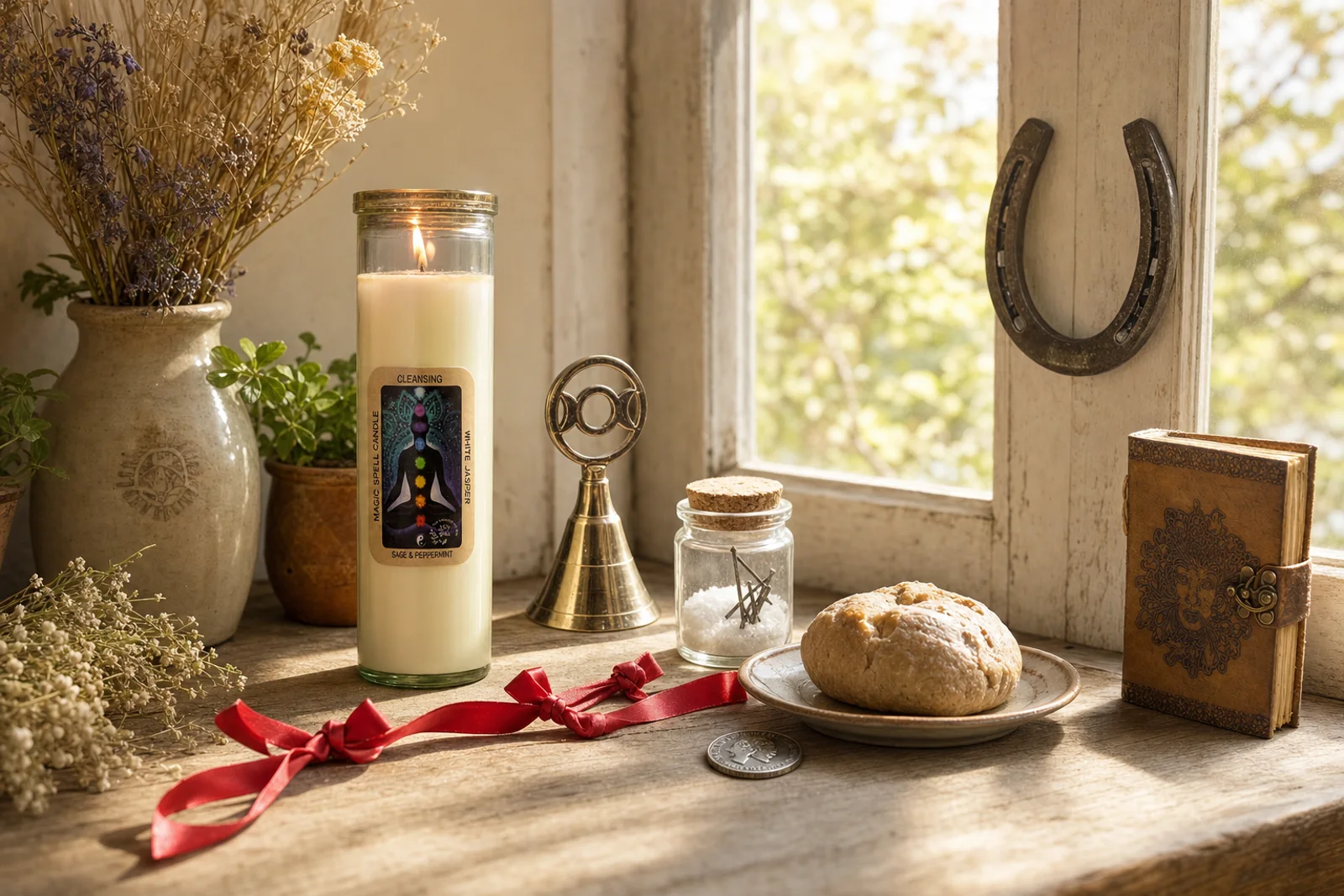
Most of the magic of the old British countryside was small. It was not robes and grand ceremonies but a coin turned in a pocket, a horseshoe nailed above the door, a knot tied with a wish, a loaf and a pinch of salt carried into a new home. These are the charms a hedge witch still loves best: quiet, practical, and woven into ordinary life.
Below are twelve traditional charms for beginners. For each one you will find where it comes from in folklore, and a simple way to work it today. They are all kind, protective or hopeful. Hedge magic has no place for curses or for trying to bend another person's will, and none of these asks you to burn, drink or eat any plant.
If you are completely new, start with our guide to what hedge magic is, then come back here. You can find every guide, spell and story in one place on our Hedge Magic page.
Before you begin
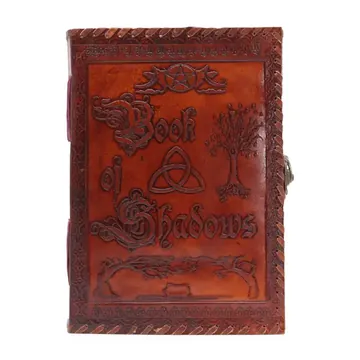
A charm is really an intention given a shape. Old charms worked because people believed in them and repeated them, season after season. So keep yours simple, say clearly what you are wishing for, and write it down in your Book of Shadows so you can look back on it. Always place candles on a heatproof surface, away from anything that can catch, and never leave a lit flame unattended.
1. Bread and salt for a new home
Where it comes from: carrying bread and salt into a new house is an old custom found across Britain and much of Europe. Bread stood for never going hungry and salt for a life with flavour and protection. Some families also brought coal, for a warm hearth.
Today: on the first day in a new home, carry in a small loaf and a little dish of salt before anything else. Set them on the kitchen table and say: may this house never know hunger, may it always be blessed. Share the bread with whoever is helping you move.
2. A candle wish at the new moon
Where it comes from: the new moon has long been thought a lucky time to begin things. Plenty of British weather and farming lore links the waxing moon with growth.
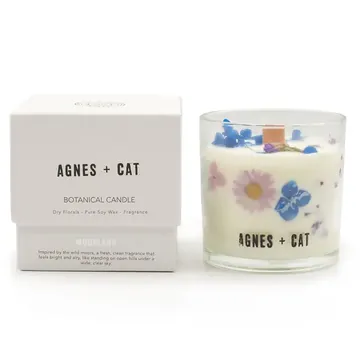
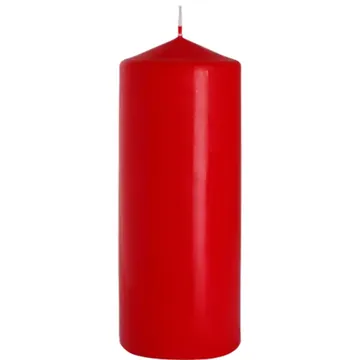
Today: on the evening of the new moon, choose a candle in a colour that suits your wish (our candle colour guide will help). Write one wish on a slip of paper, place it under the holder and light the candle. Sit with it a while, then snuff it and relight it on the following nights until it has burned down.
3. Turning your silver at the new moon
Where it comes from: one of the most widespread British customs. On first seeing the new moon, people turned over the silver coins in their pocket, so that money would grow with the moon. Many also bowed to the moon, or avoided seeing it first through glass, which was thought unlucky.
Today: keep a silver-coloured coin in your purse. When you first notice the new crescent, step outside if you can, turn the coin over and make a small wish for the month ahead.
4. A knot charm
Where it comes from: knots have been used to hold things in place for centuries. Sailors were said to buy the wind tied up in knotted cords, and a knotted cord with feathers, known as a witch's ladder, was found in a Somerset house in the 1880s.
Today: take a length of ribbon or cord in a colour you love. Tie nine knots along it, slowly, saying your intention as you tie each one, for example with this knot I keep my home peaceful. Hang it near your door or keep it on your altar.
5. A gentle witch bottle
Where it comes from: witch bottles were made in England from the 1600s, often in stoneware jars, and buried under hearths and thresholds to protect the household. Archaeologists have found them filled with bent pins, nails and other household items.
Today: fill a small glass jar with a few bent pins or small nails, a spoonful of salt and a slip of paper with your blessing for the home. Seal it, hold it for a moment while you picture your home safe and calm, then keep it near the front door or bury it in the garden. Our guide to witch bottles goes into more detail.
6. Hanging a hagstone
Where it comes from: a hagstone is a stone with a natural hole worn right through it, often found on beaches. In British folklore they were hung on bedposts, in stables and by doors to keep away bad dreams and mischief, and people said you might glimpse the fair folk by looking through the hole.
Today: if you find one on a walk, thread it on a ribbon and hang it by a window or your bed. Look through the hole now and then and make a wish.
7. A horseshoe over the door
Where it comes from: iron has been thought protective for a very long time, and horseshoes were nailed above doors and on stable walls across Britain. In much of Britain the custom is to hang it with the open end upwards, so the luck cannot run out.
Today: hang a horseshoe, or any small piece of old iron, above your front door. Touch it as you come in after a long day and leave the worries of the outside world on the doorstep.
8. Rowan and red thread
Where it comes from: rowan, with its bright red berries, was one of the great protective trees of British and Scottish folklore. An old rhyme runs rowan tree and red thread hold the witches all in dread, and small crosses of rowan twigs bound with red thread were placed over doors and in byres.
Today: take two small fallen rowan twigs, cross them, and bind the centre with red thread. Hang your little cross above a door or tuck it into your altar for the season, then return it to the earth in spring.
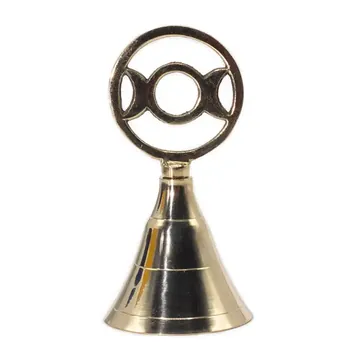
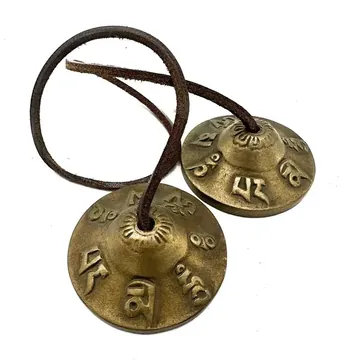
9. A bell to clear a room
Where it comes from: bells were rung across Britain to mark festivals, to call people together and, in folklore, to drive away storms and unwanted spirits. Church bells were rung loudly at New Year and on special days for luck.
Today: open a window, then walk slowly round a room ringing a small bell, especially into the corners. Picture the sound sweeping away any heaviness. It is a lovely ritual after an argument, an illness in the house or a long winter.
10. First footing at New Year
Where it comes from: in Scotland and the north of England, the first person to cross the threshold after midnight on New Year brings the luck for the year. Traditionally they carried coal, bread, salt and something to drink.
Today: ask a friend to be your first foot, or step outside yourself just after midnight and come back in carrying a little bread, salt and a candle, wishing a warm, full and happy year to everyone inside.
11. Wishing traditions
Where it comes from: British folklore is full of small wishing customs: the wishbone pulled after a Sunday roast, the first star of evening, coins dropped into wishing wells, and dandelion clocks blown into the wind.
Today: keep one wishing custom as your own. Make your wish in silence, tell no one, and write it in your Book of Shadows with the date, so you can see later what came true.
12. A gratitude charm for the hearth
Where it comes from: the hearth was the heart of the old home. Fires were banked carefully at night, and many households had small customs for keeping the fire and the luck of the house alive.
Today: once a week, light a candle in the room where your family gathers. Name three things you are grateful for in your home, then let the candle burn for a while as you go about your evening.
Keeping your charms
Write each charm in your notebook with the date and the moon phase, and note what happened afterwards. Over a year, you will build your own small book of what works for you, which is exactly what the old cunning folk did. When you are ready for more, our guides to British protection charms, the cunning folk of Britain and setting up a hedge witch altar will take you further.
Folklore and charms are shared here as tradition and for reflection. They are not a substitute for professional advice of any kind.
Questions and answers
What is the easiest hedge witch spell for a beginner?
A candle wish at the new moon is a lovely first charm. Write one wish on paper, place it under a candle on a heatproof surface, light it on the evening of the new moon and let it burn a little each night until it is finished.
Are hedge witch spells safe?
The traditional charms in this guide are simple and gentle: knots, coins, bells, salt and candles. Always use candles on a heatproof surface and never leave a flame unattended. We never suggest burning, drinking or eating any plant.
Do I need special tools to cast these charms?
No. Most use things you already have, such as a candle, ribbon, salt, a coin or a small jar. A notebook to record your charms is the most useful thing to have.
Where do these charms come from?
They come from British and Irish folk custom: new moon coin turning, horseshoes over doors, witch bottles, rowan crosses, hagstones and first footing are all recorded in local folklore. Where the history is uncertain, we say so.
Can I use these charms to make someone love me?
No. Hedge magic as we share it is about your own home, luck and wellbeing. We never offer charms that try to control another person's feelings or choices.