


















































For the hedge witch, the world is a living calendar. The hedgerow marks the turning of the year just as surely as any almanac—blackthorn blossom, swelling buds, berries, bare branches. The Wheel of the Year is a cycle of eight festivals, each a time to pause and notice what’s changing outside the kitchen window, and to mark the season with a simple ritual at home. Here, we travel through the year, festival by festival, with the hedgerow as our guide.
Imbolc: First Signs of Stirring
Traditionally celebrated on 1 or 2 February, Imbolc signals the slow waking of the land. In the hedgerow, blackthorn and hazel catkins begin to show, and the snowdrops push up through frost-bitten earth. These are the earliest hints that winter is loosening its grip. Folklore holds that this is Brigid’s time—a chance to honour the returning light and tend the hearth.
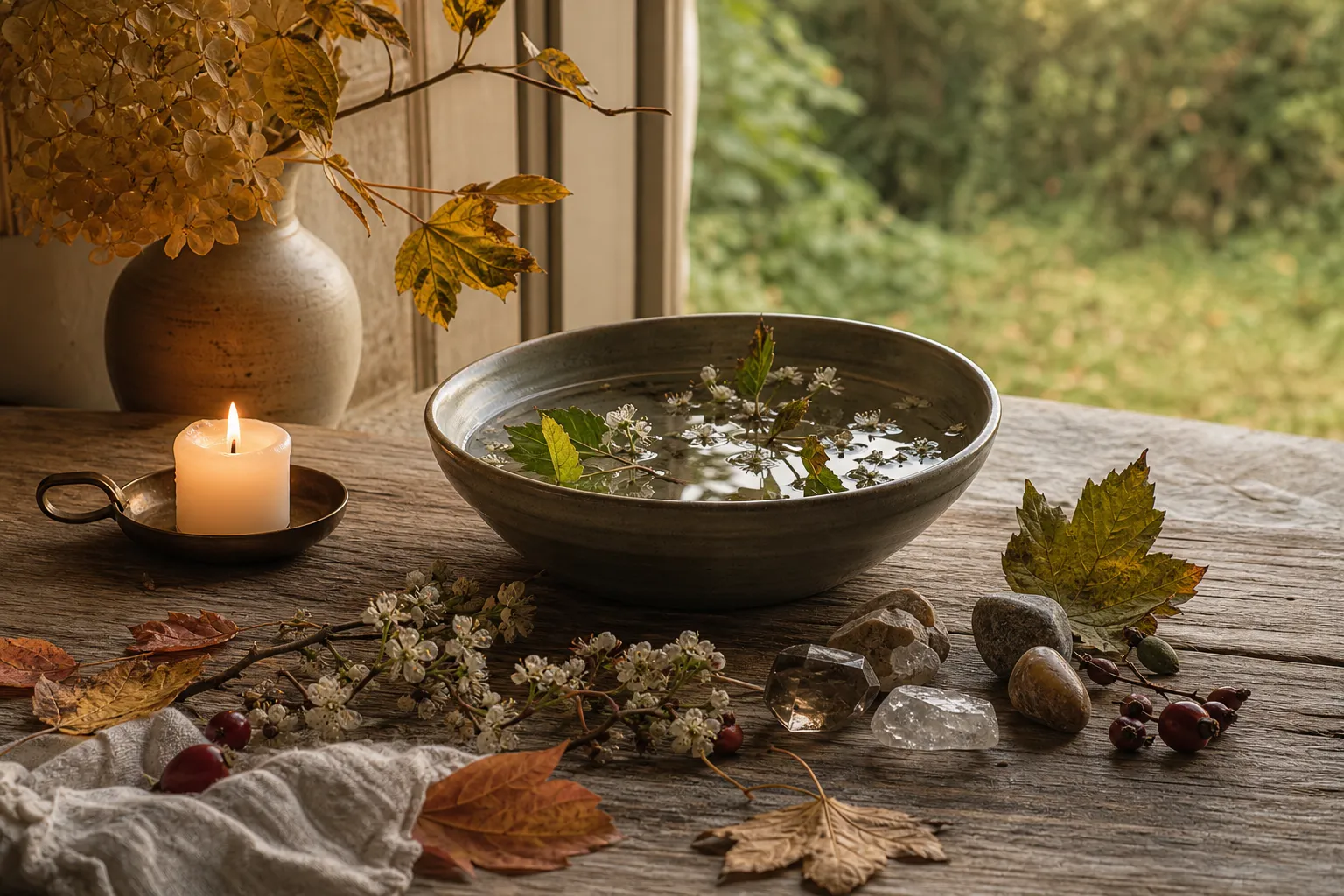
Many people today mark Imbolc by lighting a single white candle at dusk, a gentle invitation for brighter days ahead. Always remember never to leave a candle unattended. You might place a bowl of fresh water on your windowsill overnight, letting it absorb the spirit of renewal.
Ostara: The Blossom of Spring
Ostara, the Spring Equinox, falls around 20 March. The hedgerow comes alive with primroses and the first hawthorn buds. Birds return, weaving their nests among the thicket. In folklore, this is a time of balance and beginnings, when day and night are equal, and the earth’s energy feels fresh and green.
For a simple ritual, collect a small fallen twig or stone on a walk and place it on your windowsill as a symbol of new intentions. Let this token remind you of the growing light and the hope carried in every green shoot. You can learn more about the seasonal changes and their magical significance in our beginner’s guide to hedge magic.
Beltane: Maytime and Quickening
Beltane, on 1 May, is marked by the frothy white May blossom (hawthorn) crowning the hedgerows. Traditionally, this festival celebrates fertility, fire, and the quickening of life. Rural communities would dance around maypoles and kindle bonfires, but for the hedge witch, it’s the abundance of blossom and birdsong that stands out.
Try creating a tiny altar with a sprig of May blossom (never pick more than you need, and always ask permission of the plant in your heart). Place it beside a candle and spend a few minutes in quiet appreciation of the season’s energy, remembering always not to leave a candle unattended.
Litha: Midsummer and Full Leaf
The Summer Solstice, or Litha, arrives around 21 June. Hedgerows are thick with dog roses, elder flowers, and the deep green of full leaf. Folklore across the British Isles speaks of Litha as a time when the veil between worlds is thin and the powers of sun and land are at their peak.
A simple way to honour Litha is to rise early and watch the sunrise, or spend a few moments outside at noon, feeling the warmth on your skin. If you keep a journal, note the wildflowers and creatures you see—these observations are a form of quiet magic in themselves. For those interested in lunar cycles, our moon calendar can help you attune your practice to both sun and moon.
Lughnasadh: First Harvest
Lughnasadh, also called Lammas, is celebrated on 1 August. The hedgerows begin to swell with the first ripe blackberries, sloes, and early elderberries. Traditionally, this is the festival of first harvest, a time to give thanks for grain and fruit.
Mark Lughnasadh by gathering a handful of windfallen leaves or seeds and placing them in a small bowl at your altar or kitchen table, a tangible reminder of gratitude for the earth’s generosity.
Mabon: Equinox and Gathering In
The Autumn Equinox, or Mabon, falls around 22 September. Hedgerows are heavy with berries and hips, and the leaves begin to turn. In folklore, this is a time of balance, when light and dark are again equal. Many people today see Mabon as a moment for reflection and giving thanks.
Write a short note of appreciation for something that has gone well in the past six months, and tuck it into a jar or box as an offering. Keep it on your mantelpiece or altar as a quiet act of gratitude.
Samhain: Dusk and Stillness
Samhain, on 31 October, is the traditional end of the harvest and the beginning of winter’s descent. Hedgerows stand dark and tangled, leaves fallen, branches stark against the sky. In British folklore, this is a time when ancestors are honoured and the boundary between worlds is thin.
Light a small candle at dusk and spend a moment remembering loved ones who have passed. Never leave candles unattended. You may wish to place a pebble or autumn leaf beside the flame as a token of remembrance.
Yule: Midwinter’s Pause
The Winter Solstice, or Yule, falls around 21 December. The hedgerows are bare, save for holly and ivy clinging to the cold. In folklore, Yule is the rebirth of the sun, a promise that light will return. People once decorated their homes with evergreen sprigs, symbols of hope and endurance.
For a simple Yule ritual, gather a few evergreen leaves from your garden or a walk and arrange them in a small dish. Place it where you’ll see it each day, a quiet reminder that even in the darkest days, life persists.
Practical Rituals for Each Festival
- Imbolc: Place a bowl of fresh water on your windowsill overnight to invite renewal.
- Ostara: Bring home a fallen twig or stone as a symbol of new beginnings.
- Beltane: Create a mini altar with a sprig of May blossom and a candle (never leave it unattended).
- Litha: Observe sunrise or midday sun and write down your seasonal observations.
- Lughnasadh: Collect windfallen seeds or leaves and display them as a harvest offering.
- Mabon: Write a gratitude note and keep it in a jar or box.
- Samhain: Light a candle in remembrance, placing a pebble or leaf beside it (never leave it unattended).
- Yule: Arrange evergreen leaves in a dish as a symbol of hope.
These observances are simple but meaningful ways to attune yourself to the turning year. You can find further seasonal inspiration in our guides to the Wheel of the Year and moon phases, or read more about the roots of these practices in our hedge magic beginner’s guide.
Questions and answers
What is the Wheel of the Year?
The Wheel of the Year is a cycle of eight seasonal festivals, rooted in folk tradition, that mark the changing seasons and rhythms of nature.
Do I need special tools to practise hedge magic at home?
No special tools are required—simple, meaningful acts using everyday objects and attention to nature are enough for most home rituals.
How do I know when to celebrate each festival?
The festivals fall on set dates or near solstices and equinoxes; you can find a full calendar and seasonal signs in our Wheel of the Year guide.